blue note
4 minute read
Blue Note Records: Where to Start and What First Pressings Are Worth
Words by Heather June Coombs
The blue and white label is an institution. Knowing what to look for is key, and it’s not always straightforward.
There are record labels, and there is Blue Note. For jazz fans and serious collectors, the blue and white label is an institution. Founded in 1939 by Alfred Lion and Max Margulis, later joined by Francis Wolff, Blue Note did more than just document; it defined an era of American music. It’s also one of the most consistently valuable imprints in pre-owned vinyl.
Beyond the Hits: The Blue Note Sound
Blue Note's appeal wasn't just about who they signed. It was about how they sounded. Rudy Van Gelder, their engineer, shaped the label’s sonic identity from his studio in Hackensack, New Jersey. His techniques, often involving close-mic'ing and a distinctive reverb, gave Blue Note records a depth and clarity that became their hallmark. It’s why even casual listeners recognise the sound. The artwork helped, too. Reid Miles’ sleeve designs are as iconic as the music they contained. Bold typography, stark photography, and an almost abstract formalism made Blue Note covers instantly identifiable. They looked as good as they sounded. And still do.
The First Pressing Premium: What to Look For
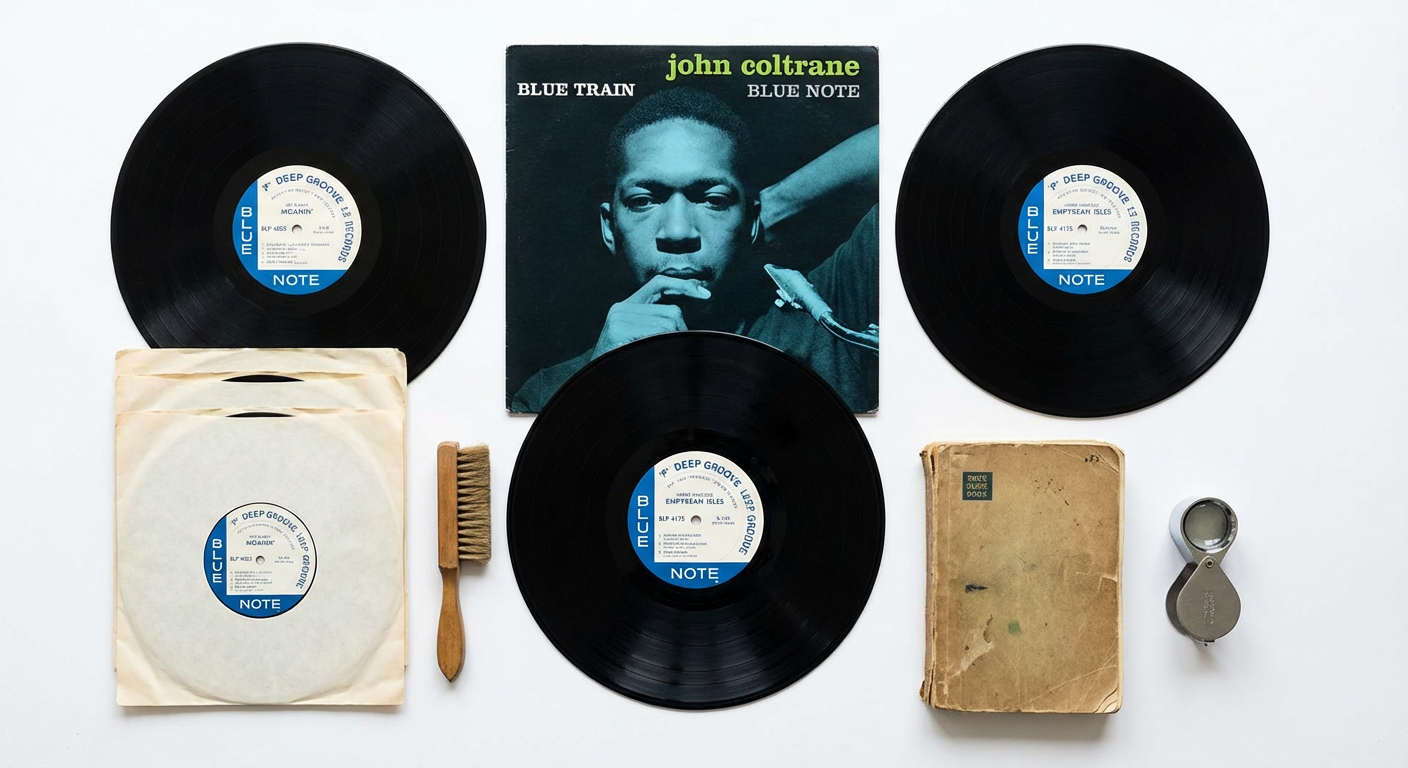
When it comes to Blue Note, 'first pressing' means something. These are the original issues, pressed in small numbers, often from Van Gelder’s master tapes. They command serious money because of their rarity and the superior sound quality. Knowing what to look for is key, and it’s not always straightforward. Early Blue Note pressings often came with a different address on the label. "767 Lexington Ave NYC" is a classic early indicator for 10-inch and early 12-inch LPs. Later, "47 West 63rd St NYC" became characteristic, moving to "NY" then to "New York" with varying punctuation. The deep groove in the label is another tell, usually present on both sides for original issues up to the mid-60s. The 'ear' or 'plastylite' mark, a small P-like swirl in the runout groove, confirms the pressing plant. If it’s there with the catalogue number and 'RVG' (Rudy Van Gelder’s etching) in the dead wax, you are almost certainly looking at an original. These details matter. Collectors will pay a premium for authenticated originals.
Key Blue Note Names and Essential Records
Certain artists are synonymous with Blue Note. Their output is consistently sought after. John Coltrane's *Blue Train* is the obvious example; its original pressing is a holy grail for many. Expect to pay thousands for a clean copy. Then there’s Horace Silver. His Song for My Father is foundational hard bop. Lee Morgan’s The Sidewinder, Dexter Gordon's Go!, and Herbie Hancock’s Maiden Voyage are all classics. Beyond the biggest names, albums by Art Blakey, Wayne Shorter, Grant Green, and Cannonball Adderley are consistently valuable. The more obscure sessions by these artists can provide excellent value without the associated hype.
Shop from this article



The Reissue Market: A Considered Alternative
Not everyone has thousands to drop on an original pressing. Thankfully, the reissue market for Blue Note is robust and often excellent. Companies like Analogue Productions, Music Matters, and now Blue Note's own 'Tone Poet' and 'Classic Vinyl' series offer high-quality reissues. The Tone Poet series, mastered from the original analogue tapes, are particularly good. They use RTI for pressing and Stoughton Printing for tip-on jackets, mimicking the originals. They’re effectively as good as a reissue gets. The Classic Vinyl series offers a more affordable entry point, still pressed well at Optimal in Germany. These are for listening, not collecting for future resale speculation.
Where to Start Your Blue Note Collection
If you’re new to Blue Note, or even jazz, don't feel obliged to chase originals immediately. The Tone Poet series is a superb starting point for quality sound and presentation without the prohibitive cost. Choose an artist or an album that resonates. For specific artists, begin with titles like Cannonball Adderley's *Somethin' Else* (especially if you like Miles Davis), Art Blakey & The Jazz Messengers' *Moanin'*, or Jackie McLean’s *Destination... Out!*. Those are entry points into different facets of the label's sound. From there, your ear will guide you. The depth of the Blue Note catalogue means there’s always something new to discover. Blue Note isn't just a record label. It's a statement of aesthetic intent, a sonic blueprint for a genre. Whether you’re hunting a rare pressing or simply enjoying a pristine reissue, the weight of that history is always present in the groove.