music
3 minute read
A Brief History of Warp Records and the Pressings Worth Collecting
Words by Heather June Coombs
The reissue is fine. The original is better. Here is why.
The Birth of Bleep and Beyond
Warp Records did not start in a boardroom. It emerged from the thriving Sheffield club scene of the late 80s, specifically from the record store and distribution network set up by Steve Beckett, Rob Mitchell, and Robert Gordon. Their early focus was on bleep techno, a distinctively British sound that blended Detroit's machine rhythms with deeper, more experimental textures. The first official Warp release, FORGEMASTERS' 'Track With No Name' in 1989, set the tone. This wasn't just another dance label; it was something else entirely. Early Warp releases often came in iconic purple sleeves, a visual identifier that quickly became synonymous with quality and innovation. They were pressing records that soundtracked a new generation's weekend. This era established Warp as a vital force in electronic music, pushing boundaries when others were content to follow.
From Bleep to IDM: The 90s Expansion
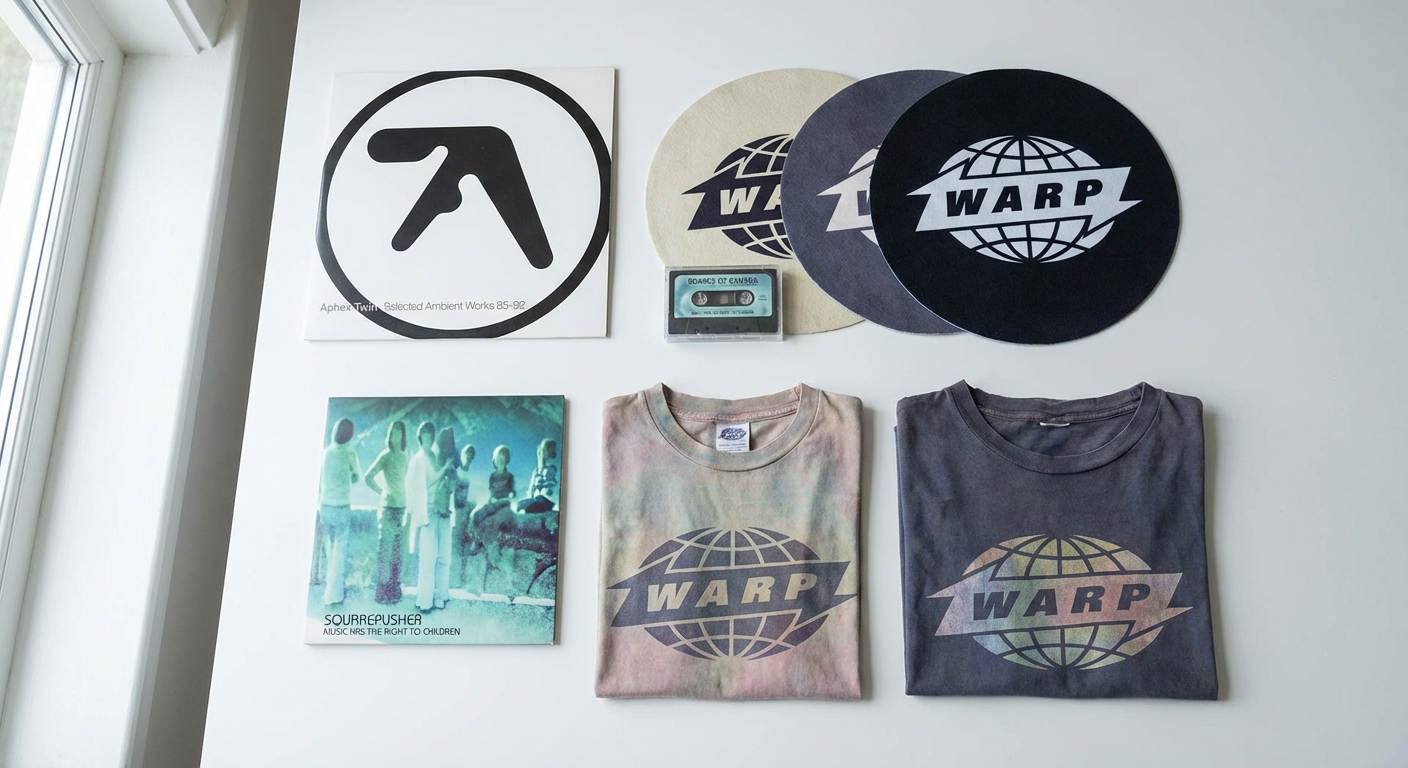
The 90s saw Warp move beyond bleep, diversifying its roster and cementing its reputation for "Intelligent Dance Music" (IDM", a term the label itself was never entirely comfortable with. This period brought seminal albums from artists like Aphex Twin, Boards of Canada, and Autechre. These records were more than just dancefloor fillers; they were intricate, often challenging, listening experiences designed for headphones as much as clubs. Aphex Twin's 'Selected Ambient Works 85–92' (WARPLP6) remains a touchstone, a perfect blend of atmospheric beauty and rhythmic ingenuity. Boards of Canada’s 'Music Has The Right To Children' (WARPLP55) defined a generation's nostalgia, with its hazy samples and analogue warmth. Autechre pushed the limits of abstract electronica, with albums like 'Tri Repetae' (WARPLP38) showcasing their unique algorithmic sound design. These are records that demand repeated listening. Original pressings from this era often hold significant value. They were cut from master tapes, pressed onto higher quality vinyl, and often came with artwork that was more meticulously reproduced. Later reissues, while welcome for their accessibility, sometimes lack the sonic depth or the tactile feel of the first run. For collectors, the initial pressing provenance matters.
Warp's Visual Identity: Artwork and Packaging
Warp's commitment to aesthetics extended beyond the music itself. From The Designers Republic's iconic work for Aphex Twin and Autechre, with their stark typography and minimalist designs, to the more organic, faded photography of Boards of Canada sleeves, the visual language of Warp was always distinctive. This made their records immediately recognisable on shop shelves and in record bags. Packaging was often as considered as the music. Limited editions, coloured vinyl, and detailed liner notes were common. This meant buying a Warp record was an experience, not just a transaction. It encouraged a deeper connection with the artist and the label's ethos. This attention to detail contributes to the collectability of their early releases.
Key Pressings and What to Look For
For a serious Warp collector, certain pressings stand out. * **Aphex Twin - 'Selected Ambient Works 85–92' (WARPLP6):** Seek out the original 1992 double vinyl pressing. Later reissues exist, but the soundstage on the original is often superior. * **Boards of Canada - 'Music Has The Right To Children' (WARPLP55):** The 1998 UK double LP with the gatefold sleeve is the one to own. Its analogue warmth on vinyl is unmatched. * **Autechre - 'Incunabula' (WARPLP10):** The 1993 debut is a cornerstone of experimental electronic music. An original in good condition is a find. * **LFO - 'Frequencies' (WARPLP3):** A bleep techno essential. The 1991 original LP or the definitive 2005 reissue (WARPLP3R) are both solid. * **Nightmares on Wax - 'Smokers Delight' (WARPLP34):** The 1995 double LP is a trip-hop classic. Authenticate the matrix numbers carefully. Condition is paramount. Look for clean vinyl, minimal surface noise, and intact sleeves. Pay attention to the matrix/runout details – these are your fingerprints for verifying pressings. Discogs is an essential tool here, but always cross-reference with physical inspection.
The Warp Legacy: Beyond the Records
Warp Records did not just release music; it shaped a culture. It gave rise to a sound that influenced countless artists, broke down genre barriers, and fostered a passionate community of listeners and collectors. Their impact on electronic music and wider independent culture is undeniable. The records they put out were not fads; they were foundational. Collecting them today is more than just owning an object; it is owning a piece of that history.