authentication
3 minute read
How to Authenticate Stone Island: Badge, Label, and Stitching Tells
Words by Heather June Coombs
The badge is an indicator, not a guarantee. True authentication lies in the details beyond it.
The Anatomy of Real Stone Island
Identifying a genuine Stone Island piece goes beyond the badge. The fakers are getting better, but they still miss details. Knowing what to look for will save you money and disappointment. This is about recognising quality from a brand built on it.
The Badge: It's Not Just About the Compass
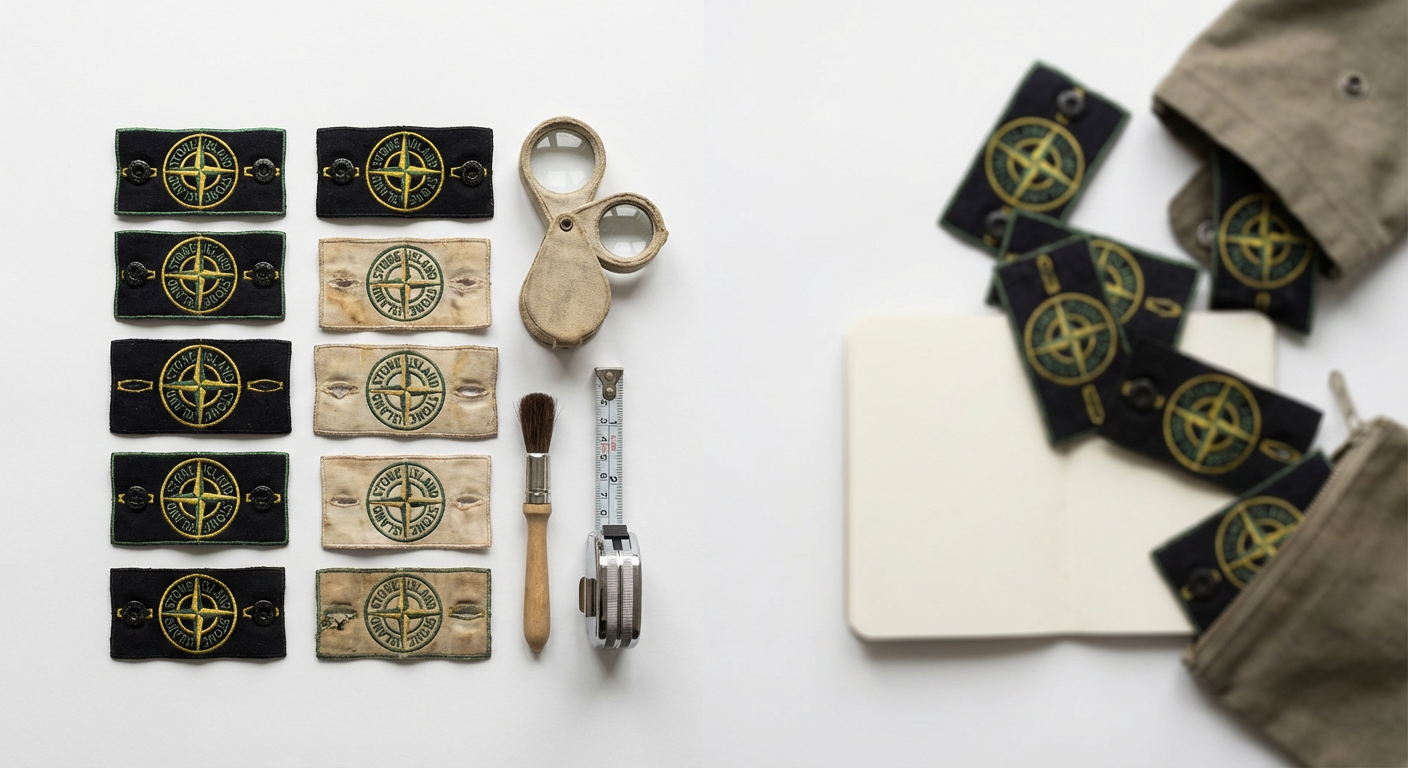
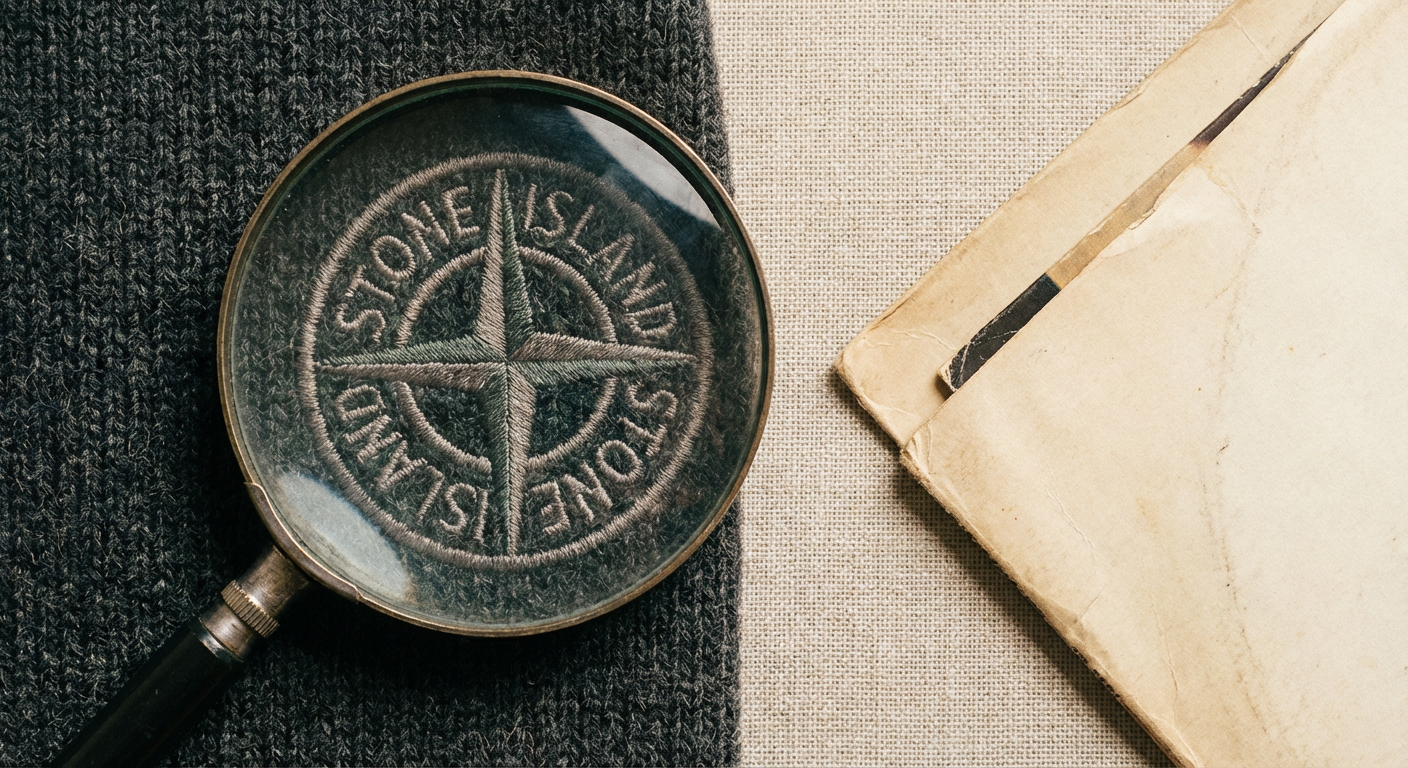
The Stone Island badge is the most obvious tell, and also the most copied. Don’t rely on it alone. Genuine badges have specific characteristics. The stitching holding the badge on is always two parallel lines on each end, forming a neat box around the buttons. The threads used are thick, never thin. The compass itself should be crisp, with clean lines and no blurring. The 'Stone Island' text is deeply embroidered, not printed or thinly stitched. The buttons holding the badge are crucial. They are always black, with four holes, and have a distinct raised edge around the perimeter. Pre-2000s buttons may be slightly different, but the modern ones are consistent. The thread used to attach the buttons should be the same colour as the main fabric of the garment. This is a small detail many fakes miss.
Internal Labels: Where the Story Unfolds
Every genuine Stone Island garment has a suite of internal labels that provide critical information. The main neck label typically states "STONE ISLAND" in bold, with "MADE IN [COUNTRY, often TUNISIA or ROMANIA]" below it. Look for precise, uniform stitching and high-quality fabric on the label itself. Fakes often have flimsy, shiny labels or poor print quality. Below the neck label, you'll find a series of smaller labels. The wash label includes care instructions, material compositions, and crucial authentication details. The Certilogo QR code and serial number are here, usually on a separate white tag. Scan the QR code; it should take you directly to the Certilogo website which will verify the item. Inputting the 12-digit code manually also works. If the code has been used multiple times, or doesn't work, it's a red flag. Be aware: some older items (pre-2014) may not have a Certilogo. Another small label will often indicate the season and product code. For example, 'SS' for Spring/Summer, 'AW' for Autumn/Winter, followed by the year (e.g., 'SS 18'). Understanding these codes and cross-referencing them against known collections can help confirm authenticity, especially for older pieces.
Shop from this article

Stitching and Fabric: The Unsung Heroes
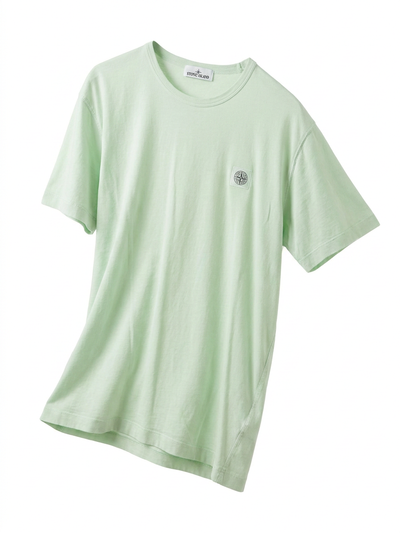
Stone Island's reputation is built on fabric innovation and construction quality. The stitching should always be immaculate. Expect tight, even stitches, no loose threads, and no fraying at seams. Check high-stress areas like cuffs, hems, and around zips – these areas expose poor manufacturing quickly. Double-stitching is common on many garments, and it should be clean and consistent. The fabric itself is often the biggest giveaway. Stone Island uses proprietary dyeing processes and fabric treatments. Items should feel substantial, not flimsy. The colours are often deep and rich, not washed out or uneven. If an item claims to be a certain material (e.g., Dynema, Mussola Gommata, David-TC), research that fabric. Genuine examples will have a specific texture, weight, and sometimes even smell unique to the treatment. Cheap, generic fabric is a dead giveaway.
Zips, Fasteners, and Hardware
Stone Island largely uses YKK zips, often branded with 'STONE ISLAND' on the zipper pull. They should operate smoothly, without snagging. Buttons, other than the badge buttons, are typically sturdy, often branded, and securely attached. Poppers feel firm and click satisfyingly into place. Any flimsy or generic hardware suggests a counterfeit. Check the reverse of poppers too; they often bear brand markings. Authenticating Stone Island is a forensic exercise. No single detail tells the full story. It's the combination of specific characteristics that confirm a piece's provenance. The fakes may replicate one or two aspects, but they rarely get every single detail right. Know the real thing, and you'll spot the imposters.