brand focus
3 minute read
How to Authenticate Vintage Nike: Tags, Labels, and Sole Tells
Words by Heather June Coombs
A good fake will mimic the current, but a vintage fake often struggles with the past.
Know Your Era
Authenticating vintage Nike means understanding its history, not just looking for a perfect stitch. The brand's output changed dramatically over the decades. A 70s Waffle Trainer will present differently to an 80s Air Jordan 1 or a 90s Air Max. General rules apply, but specific model knowledge is crucial. Nike did not always have the meticulous quality control of today; variations were common even amongst genuine articles.
Consider the period a piece supposedly comes from. Is a specific tag correct for 1979? Are the materials consistent with what Nike used then? Fakes often get these timeline details wrong, mixing elements from different eras.
The Stitching Standard
Examine the stitching, especially on apparel. Vintage Nike, particularly from the 70s and 80s, often features single-needle stitching. Double-needle became more standard later. Look for consistency in stitch length and tension. Loose threads or uneven seams are red flags. While not all vintage Nike was immaculate, significant sloppiness usually indicates a counterfeit. Pay close attention to embroidery, like the Swoosh or Nike Air logo; it should be dense and clean, with no frayed edges.
On footwear, stitching around eyelets, overlays, and the toe box should be uniform. Early Nike shoes, often made in Japan or Korea, display a surprising level of hand-finished detail. Later, mass production introduced more standardisation, but the underlying quality remained for genuine pieces.
Tag and Label Tells
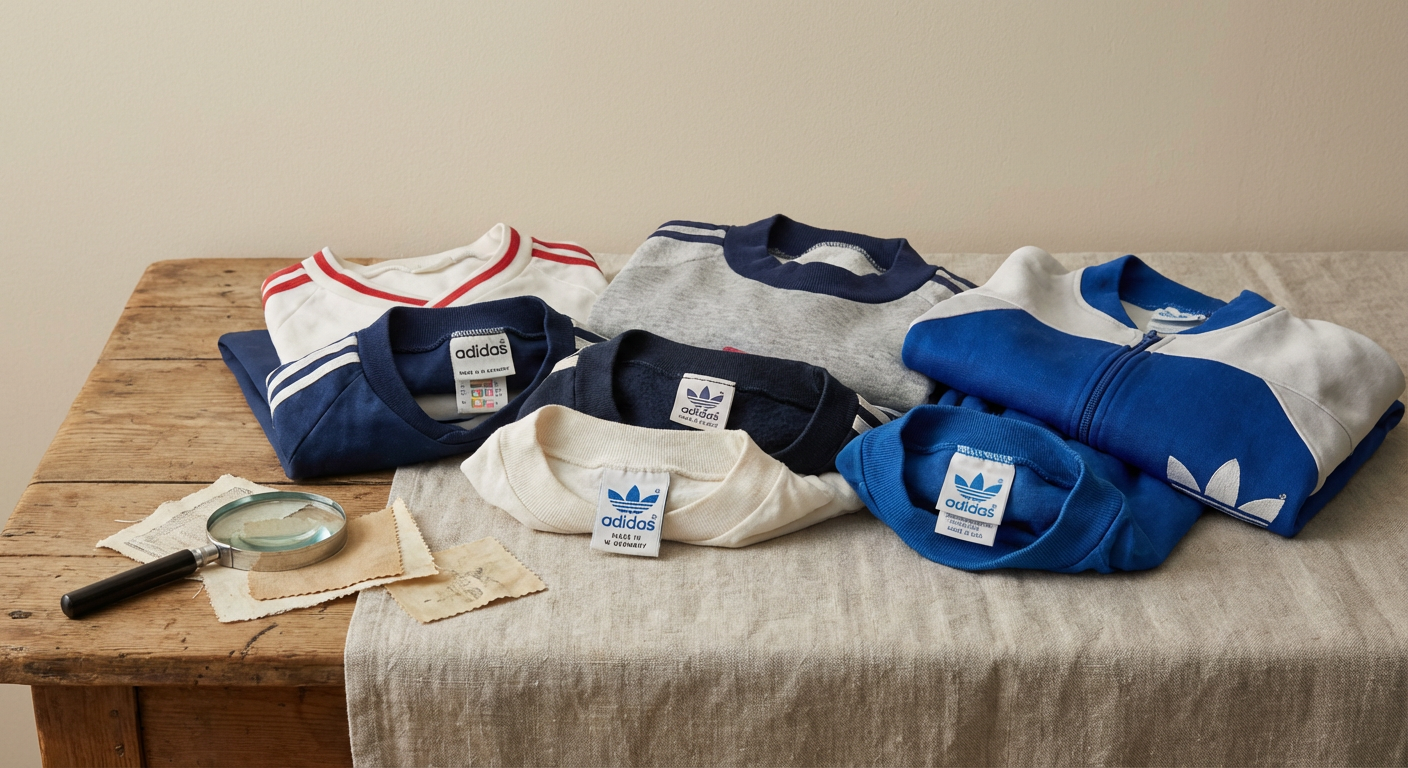
This is often the first and easiest check for apparel. Nike tags changed regularly. Early tags from the 70s and early 80s are typically orange or blue with white lettering, often quite small. Later in the 80s, silver and white tags with red or black lettering became common. By the 90s, the "grey tag" era arrived, followed by the white tag with a colourful graphic border.
Look for misspellings, incorrect fonts, or poor print quality. Genuine tags are usually firmly sewn. Check the country of origin; genuine vintage Nike was made in a more diverse range of countries than today. Japan, Korea, Taiwan, and later China, Thailand, and Indonesia are all legitimate. An item claiming to be from a country not active in Nike production during its purported era is a fake.
Fabric and Feel
Touch and weight are important. Vintage Nike often used specific blends – cotton, nylon, polyester – that felt different to modern equivalents. An old windbreaker from the 70s made of thin, crinkly nylon won't feel like a modern tech-fabric jacket. Similarly, a vintage cotton tee will often have a softer, more worn-in feel, but the quality of the original cotton should still be apparent. Fakes often use cheaper, lighter, or rougher fabrics that don't match the period's genuine articles.
Shop from this article
Ribbing on cuffs and hems should be substantial and retain some elasticity. Faded colours are expected with age, but the base fabric quality shouldn't have disintegrated unless heavily worn or poorly stored. This is where experience with genuine vintage items pays off.
Sole Details and Footwear Anatomy
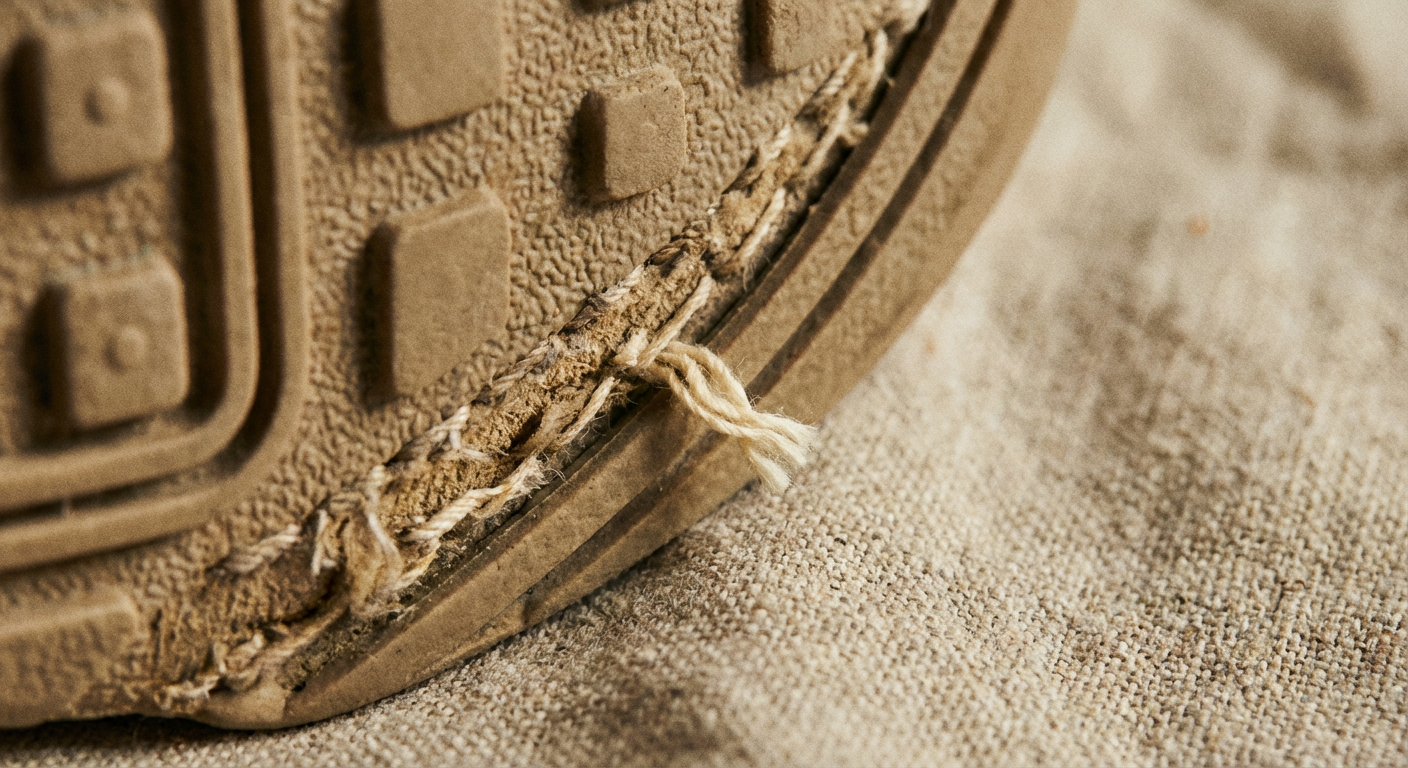
For sneakers, the outsole pattern and rubber quality are key. Early Nike Waffle outsoles, for example, had a distinct texture and grip. The rubber should feel robust, not flimsy or overly plastic-like. Check the heel tabs; early Air Jordans had specific "Nike Air" placements and fonts. The shape of the Swoosh on the side panels evolved over time, as did its stitching and material.
The inside of the shoe also provides clues. Insoles, even if worn, should reflect the original construction. Many fakes often have generic or poorly attached insoles. Check for even stitching on the lasting board inside the shoe. Ultimately, understanding the construction nuances of specific models from their original release window is the most reliable method for footwear.
The Devil in the Details
Authenticating vintage is not a science. It's an art, informed by obsessive knowledge and experience. Learn the specific nuances of the era and product you are interested in. Compare photos of known genuine articles against the one in question. Consult forums and communities dedicated to specific vintage Nike collectors. A good fake will mimic the current, but a vintage fake often struggles with the past. They get the small, anachronistic details wrong.