outerwear
3 minute read
How to care for Stone Island — protecting a piece worth keeping
Words by Heather June Coombs
Most mainstream dry cleaners will strip a DWR finish, rendering your technical jacket far less effective against the elements.
How to care for Stone Island — protecting a piece worth keeping
Buying a piece of Stone Island is an investment, whether it is a recent drop or a vintage find. These are not fast fashion items designed for a single season. They are built to last, engineered for performance, and carry a heritage that demands respect. Proper care extends their life, preserves their look, and maintains their value. Skip the dry cleaner where possible; they rarely understand the intricacies of technical fabrics.
Washing different Stone Island fabrics
Stone Island uses a diverse range of materials, each requiring specific attention. Always check the care label first. If it suggests dry cleaning, question it. Many technical nylons and treated cottons are better off hand-washed or machine-washed on a delicate cycle at home. **Nylon Metal & Crinkle Reps:** These iridescent nylons are known for their unique colour and texture. Machine wash on a cold, delicate cycle with a mild, non-biological detergent. Avoid harsh chemicals, bleach, or fabric softener. Air dry flat, out of direct sunlight, and never tumble dry. High heat will damage the resin coating and alter the fabric's appearance. **Ghost Pieces & Treated Cottons (e.g., O.V.E.R.S.H.IRT):** Ghost pieces often feature monochrome branding and special dyes. Treat these similarly to Nylon Metal – cold wash, delicate cycle. For heavily treated cottons like those found in overshirts or some outerwear, follow the same cold, gentle machine wash. The key is to minimise agitation and heat to preserve the garment's structure and any special finishes. **Standard Cotton (T-shirts, Sweatshirts, Knitwear):** Most cotton Stone Island items can be machine washed at 30°C on a gentle cycle. Turn them inside out to protect any prints or dye treatments. Use a mild detergent. Avoid excessive spin speeds to prevent stretching or damage.
The Stone Island Badge: Remove it before washing
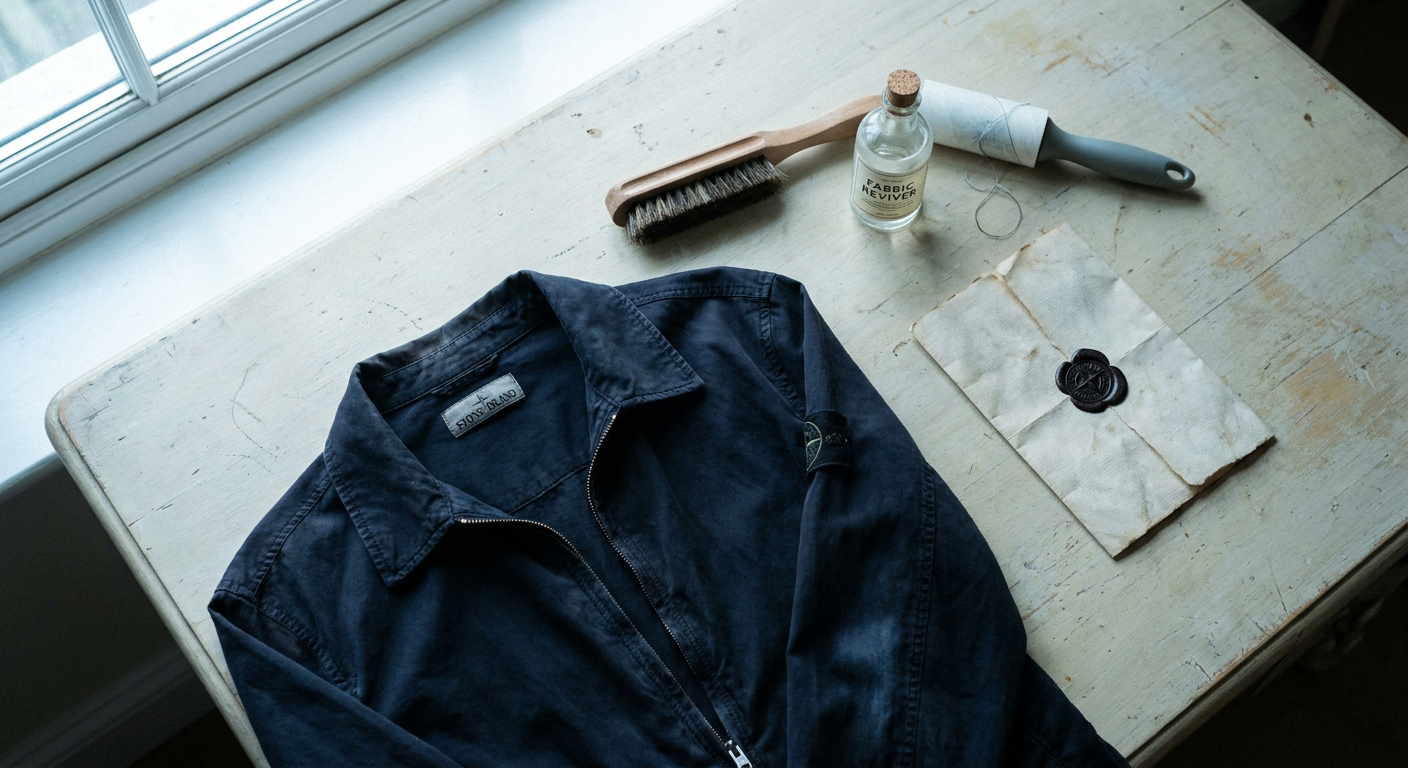
The compass badge is synonymous with Stone Island. It is also the most vulnerable part of the garment during washing. Always remove the badge before putting any item in the wash. This prevents damage to the badge itself – fraying, discolouration, or snagging – and stops the buttons from catching on other garments or the machine drum. Store it safely, perhaps in a small drawstring bag, until the garment is clean and dry. For a truly pristine look, the badge can be gently hand-washed separately with a soft cloth and mild soap, then air-dried.
Shop from this article

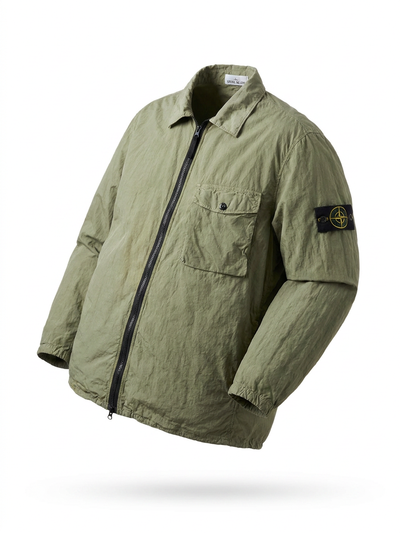
DWR refresh for technical outerwear
Many Stone Island technical jackets feature a Durable Water Repellent (DWR) finish, essential for their performance. Over time, and with washing, this coating degrades. When water stops beading and instead soaks into the fabric, it is time for a refresh. First, ensure the jacket is clean. Then, apply a DWR restoring product. These usually come in a spray-on or wash-in formula. Brands like Grangers, Nikwax, or Fabsil offer excellent options. Follow their instructions precisely. Often, this involves a low-heat tumble dry or careful ironing to 'activate' the repellent, bonding it to the fabric fibres. Test a small, inconspicuous area first.
Pressing and storing Stone Island knitwear
Stone Island knitwear, from lambswool to gauge cottons, should rarely be pressed with a traditional iron. Ironing directly can flatten the fibres, create shine, or even melt synthetic blends. Instead, use a steamer. Hang the knitwear and gently steam out any creases. This relaxes the fibres and restores the garment’s natural shape without direct heat or pressure. If you must iron, turn the garment inside out, use a low heat setting, and place a damp cloth between the iron and the knit. Press lightly, never dragging the iron. Always store knitwear folded flat in a drawer or on a shelf to prevent stretching or hanger marks. Never hang heavy knitwear; its weight will pull it out of shape. For long-term storage, ensure items are clean and dry, then place them in breathable garment bags to protect against dust and moths. Proper care is not just about cleanliness; it is about extending the lifespan of a garment designed for longevity. Treat your Stone Island pieces with the attention they deserve, and they will serve you for years, holding their form and their inherent value.