ninja tune
3 minute read
Ninja Tune: Label History and the Pressings Worth Collecting
Words by Heather June Coombs
The reissue is fine. The original is better. Here is why.
The Birth of a Sound
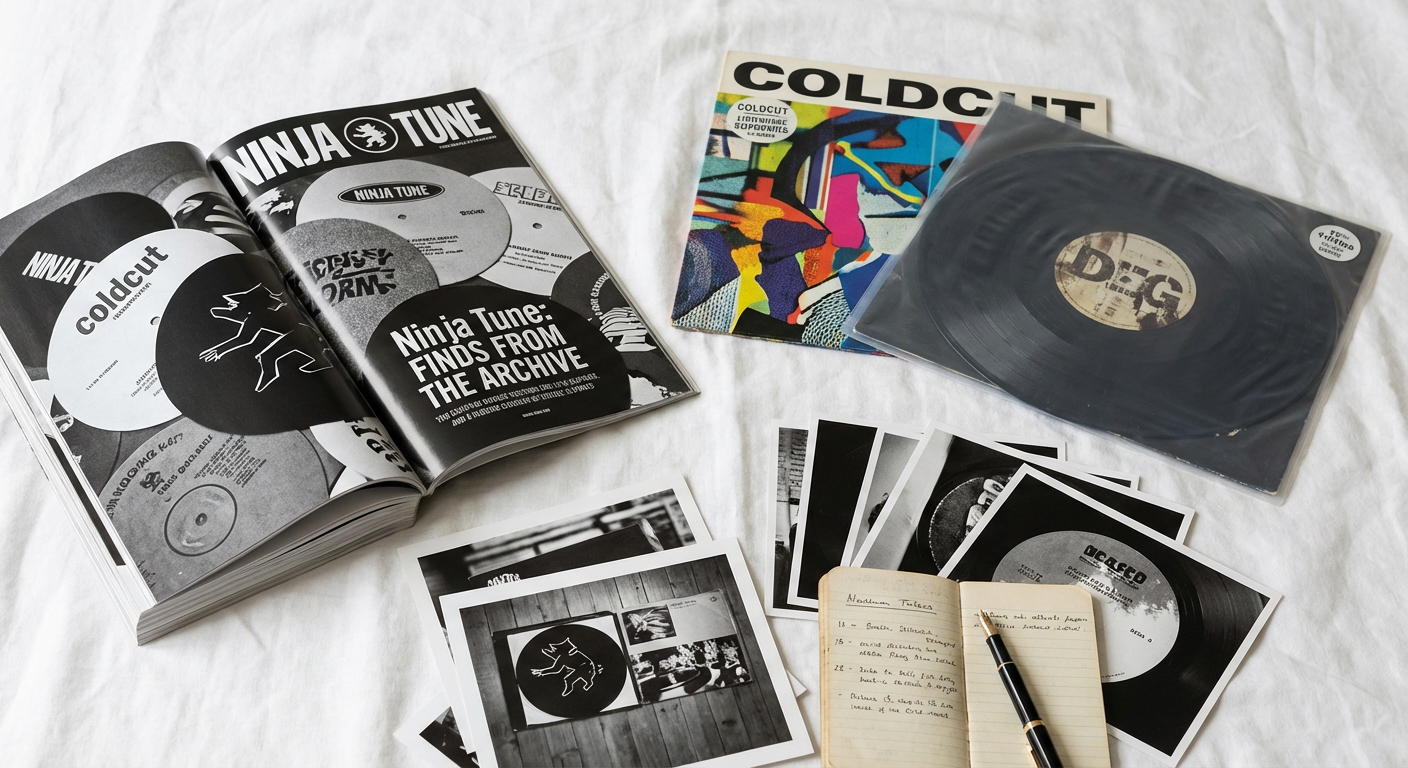
Ninja Tune wasn't founded in a boardroom. It started in a squat, south London, in 1990. Matt Black and Jonathan More, otherwise known as Coldcut, wanted to release music without interference. Their blend of jazz, funk, hip-hop, dub, and electronics didn't fit anywhere else. So they built their own space.
Their first output, a series of ninja-themed 12-inches, laid the groundwork. Think cinematic beats, dusty samples, and a refusal to stick to genre lines. It was a conscious rejection of the polished, commercial sound dominating the charts. This was about freedom and exploration.
Early Classics: The Foundations
The early to mid-90s saw Ninja Tune define its aesthetic. Artists like DJ Food and The Herbaliser became synonymous with the label's "trip-hop" leaning, though "downtempo beats" might be more accurate. DJ Food's Jazz Brakes series, starting in 1991, remains essential. These early pressings are where collectors should focus.
The Herbaliser's 1995 debut, Remedies, is another cornerstone. It's lush, intricate, and deeply funky. Find an original copy and you're holding a piece of not just label history, but British electronic music history. These weren't mass-produced, so condition is key.
Look for: The early Jazz Brakes volumes on 12-inch. Original UK pressings of The Herbaliser's first two albums. Expect to pay for good condition.
The Golden Era: Broadening Horizons
By the late 90s and early 2000s, Ninja Tune was a global force. Artist rosters expanded, sounds diversified. Amon Tobin brought a darker, more complex sound design with albums like Bricolage (1997) and Permutation (1998). Mr. Scruff delivered playful, expansive sets with Keep It Unreal (1999).
Cinematic Orchestra's Motion (1999) introduced live instrumentation and a jazz sensibility that felt both classic and modern. These records cemented Ninja Tune's reputation for quality, eclectic output. Many of these first pressings were thick, well-manufactured vinyl, a joy to own.
Amon Tobin: finding early pressings, especially his first three LPs, is a worthy pursuit. The sonic detail on good vinyl is exceptional. Mr. Scruff's Keep It Unreal often fetches good prices, particularly with the original artwork. The 20th-anniversary reissue exists, but the first run sounds better.
Beyond the Beats: Expanding the Catalogue
Ninja Tune rarely stood still. The 2000s and 2010s saw further evolution. Bonobo became a mainstream success story, his soulful, atmospheric electronic music reaching huge audiences. His albums like Days to Come (2006) and Black Sands (2010) are popular, not just among collectors but with casual listeners.
Actress and Floating Points pushed the boundaries of electronic music, bringing avant-garde and dancefloor sensibilities respectively. Roots Manuva's hip-hop, Young Fathers' experimental rock, and Sampa the Great's rap all found a home on the label, proving its continued open-mindedness.
Collecting later Ninja Tune releases often means looking for limited editions or coloured vinyl, which the label embraced with enthusiasm. While these may not offer the same historical weight as the early material, they often command decent resale due to scarcity and aesthetic appeal.
What to Look For: Collector's Notes
Condition is paramount. Inner sleeves, original artwork, and minimal surface noise are what you're paying for. Most Ninja Tune vinyl from the 90s and early 2000s was pressed well. Minor scuffs or warps can significantly degrade the experience of these production-heavy records.
First pressings almost always sound superior. Remixes and reissues are common, but the depth and clarity of the original masters on good vinyl are usually unmatched. Discogs is your friend for catalogue numbers and pressing specifics. Don't assume a "limited edition" coloured vinyl from 2015 will be as valuable as a first run from 1995.
Ninja Tune proved you could build an empire from independent principles. Their catalogue is a testament to consistency, quality, and a steadfast refusal to compromise. Collecting their output isn't just about owning records; it's about owning a piece of a singular vision.