buying guides
5 minute read
Size up or size down? Buying pre-owned when sizing is ambiguous
Words by Heather June Coombs
A vintage Massimo Osti smock marked Medium will routinely measure 24 inches pit to pit. Trust the tape, not the label.
A size tag on a piece of pre-owned clothing is at best an approximation and at worst an outright lie. Between thirty years of wash cycles, regional distribution differences, and the shifting whims of design directors, a vintage Large rarely fits like a modern one. If you buy solely by the letter on the neck label, you will end up with garments you cannot button.
The solution is not guessing. It is understanding how specific labels engineered their cuts across different eras, and learning the four numbers that make label sizes redundant.
The Italian trap: Stone Island across three eras
Modern Stone Island fits notoriously small. If you buy a crewneck from the current season in your usual UK size, you will find it tight across the shoulders and short in the body. The general consensus for current-era pieces is simple: take one size up from your standard fit, and sometimes two if you prefer a relaxed drape.
Assume that rule applies to the archive, however, and you will drown in fabric. Massimo Osti designed garments in the 1980s and early 1990s with utilitarian, boxy proportions. An Osti-era Marina jacket or Tela Stella smock marked Medium often measures 24 inches from pit to pit. That is equivalent to a modern Extra Large.
The shift happened during Paul Harvey’s tenure between 1996 and 2008. Cuts gradually narrowed as European menswear drifted towards sharper silhouettes. By the mid-2000s, garments began skewing closer to traditional Italian tailoring blocks. Furthermore, garment dyeing introduces natural variance. Two identical Raso Gommato jackets from autumn 2004 can measure an inch apart depending on how hot the dye bath was and how the cotton responded. Never assume parity across different colourways of the same piece.
Scandinavian drift: Norse Projects and Our Legacy
Early Norse Projects was built for slim Danes. In the early 2010s, when the Anton Oxford shirt and the Ketel sweatshirt defined the brand, the block was narrow through the chest, high under the armpits, and unforgiving in the shoulders. If you are buying early white-label Norse pieces from 2010 to 2014, sizing up is almost mandatory unless you have a particularly lean build.
Around 2018, Norse Projects updated its core blocks. The brand broadened the shoulders, dropped the armholes, and introduced more ease through the torso. Modern Norse fits true to size with a clean, Scandinavian taper. If you buy a pre-2015 piece expecting that modern cut, you will be disappointed.
Our Legacy followed the opposite trajectory. Early pieces from the late 2000s were neat and tailored, fitting true to European size conventions like 48 for Medium and 50 for Large. Over the past six years, the Stockholm label moved decisively into oversized, slouchy silhouettes. A size 48 in a current-era Borrowed Shirt or Box Shirt fits like a traditional 52. When buying pre-owned Our Legacy, check the style name. Anything with "Box", "Borrowed", or "Big" in the title is intentionally cut two sizes larger than the tag indicates.
The Tokyo conversion: archive Uniqlo and Japanese imports
Archive collaborations from Uniqlo require careful inspection, particularly early runs of the Jil Sander +J line from 2009 or the Undercover UU collection from 2012. Many of the best pieces circulating on UK resale platforms were sourced directly from Japan via proxy services.
Japanese Domestic Market (JDM) sizing is consistently one full size smaller than UK and European sizing. A Japanese Large corresponds directly to a Western Medium. The discrepancy is not just in the chest width. Japanese cuts are engineered with shorter sleeve lengths and a reduced back rise to suit shorter torsos.
To identify where an archive Uniqlo piece originated, check the internal wash care tag. If the primary text is Japanese with prices originally listed in yen, size up. If the tag features multi-language care instructions including English and French, it was cut for Western distribution and will fit closer to standard British high street sizing.
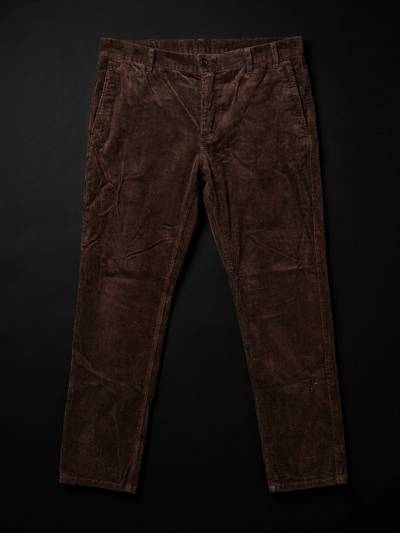
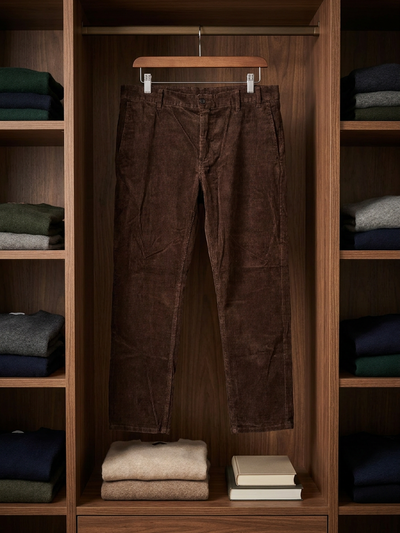
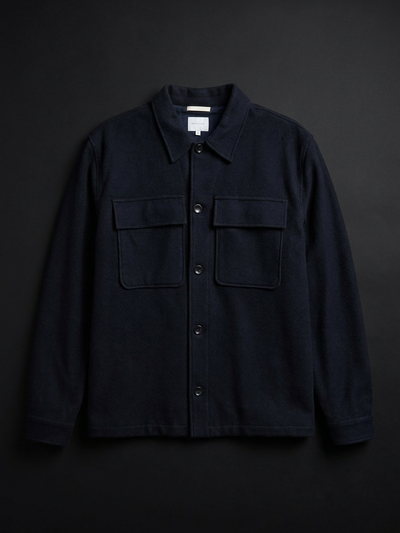
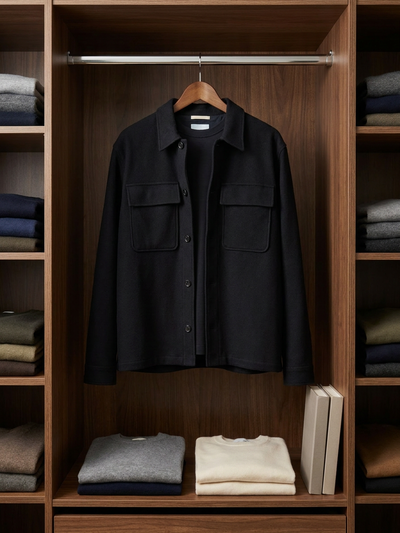
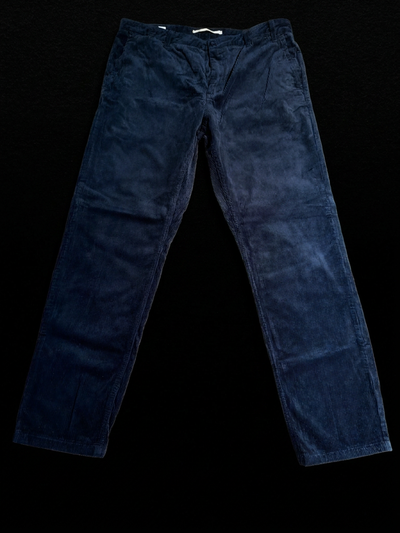
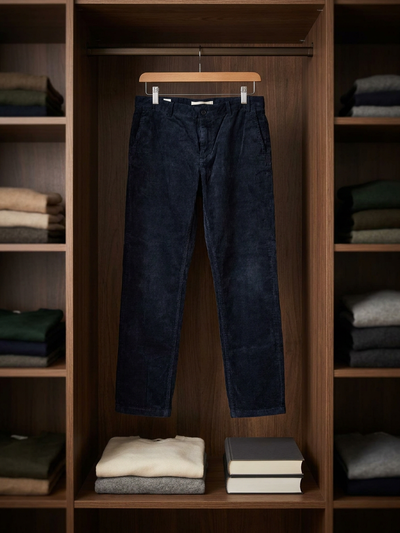
Shop from this article
Four measurements that make the tag irrelevant
Sellers on secondary platforms describe fits subjectively. One person's "boxy fit" is another person's crop. Ignore the adjectives and request four flat measurements taken with a standard tailor's tape.
Pit to pit (P2P): Measured straight across the chest, flat, from the bottom of one armpit seam to the other. Double this number to get the total chest circumference. For a slim fit, you want two inches of ease above your actual chest measurement. For a regular fit, allow three to four inches. For outerwear meant to layer over knitwear, look for four to six inches of allowance.
Shoulder width: Measured across the back yoke from the point of one shoulder seam straight across to the other. If a jacket's shoulder seam sits inside your shoulder point, movement will be restricted regardless of how wide the chest is.
Back length: Measured from the base of the collar seam down the centre back to the bottom hem. Essential for jackets and vintage t-shirts, which often shrink vertically in warm tumble dryers while retaining their width.
Sleeve length: Measured from the shoulder seam down to the outer edge of the cuff. Crucial for tailored coats and vintage workwear, where previous owners may have altered the sleeves.
The pre-owned sizing cheat sheet
Use these baseline rules of thumb when browsing without measurements:
Stone Island (Modern, post-2010): Size up one. Always.
Stone Island / C.P. Company (Vintage, pre-2000): Size down one, or stay true for an oversized drape.
A.P.C.: True to size for denim. Knitwear and outerwear from pre-2015 run half a size small.
Barbour (Traditional Bedale/Beaufort): Sized by chest inches. A size 38 fits like a 40 to accommodate a heavy sweater. Size down for a modern town fit.
Carhartt Work In Progress (WIP): True to European size. Mainline American Carhartt: size down at least one, often two.
The smartest purchase you can make before buying vintage outerwear is a three-pound cloth measuring tape. Take your best-fitting jacket, lay it flat on the floor, note down those four key figures in your phone, and compare every listing against your personal baseline. If a seller refuses to provide pit-to-pit numbers, close the tab and wait for another listing. The market is full of clothes; there is no reason to buy one that does not fit.