buying guides
4 minute read
How to build a pre-owned wardrobe from scratch — a practical framework
Words by Heather June Coombs
A heavily worn jacket at forty pounds is almost always worse value than the same jacket in near-mint condition at a hundred.
Most people build a pre-owned wardrobe the wrong way round. They start with impulse buys: a £15 graphic t-shirt with a stretched collar, an odd pair of Italian trousers that do not fit properly, or a novelty jacket that sits in a wardrobe for eighteen months before heading back to a charity shop. They spend three hundred pounds across six months and end up with an incoherent pile of someone else's cast-offs.
The right way is structural. You build from the outside in, targeting garments where manufacturing standards have demonstrably collapsed on the high street, and where depreciation works heavily in your favour. When done properly, buying pre-owned is not a compromise. It is an exploit of a broken retail system that charges four hundred pounds for polyester-blend coats while better, fully canvassed wool originals sit online for a third of the price.
The 60/40 budget split
Outerwear and knitwear should take sixty percent of your initial spend. Trousers, shirts, and footwear take the remaining forty.
This is basic material reality. Modern high street outerwear is thin, glued together, and heavily reliant on synthetic linings that make you sweat on the tube. Modern knitwear is even worse. Fast-fashion merino wool is spun from short fibres that pill within three wears and develop holes around the seams by Christmas.
Outerwear and knitwear hold their structural integrity over decades when made properly. Heavy British wool, Ventile cotton, oilskin, and dense Scottish lambswool look better with age. They also absorb the most retail depreciation. A high-grade wool overcoat that cost £800 brand new regularly changes hands for £180. A washed cotton t-shirt that cost £40 sells for £15. The margin of value is in the heavy pieces.
Foundation brands with stable sizing
When you start buying pre-owned without the luxury of a changing room, fit consistency is everything. You want makers whose patterns have not drifted wildly over the past decade.
For outerwear, Barbour remains the most reliable entry point. A vintage Beaufort or Bedale cut in South Shields twenty years ago fits virtually the same as one made last winter. You know your chest size, you buy the jacket, you rewax it once every two years. For workwear jackets, look at older Carhartt WIP or Arket, where the proportions are cut squarely and predictably.
For knitwear, turn to heritage manufacturers rather than fashion labels. John Smedley for fine-gauge sea island cotton and merino. Jamieson's of Shetland or Harley of Scotland for heavy crewnecks. Margaret Howell produces exceptional knitwear on the secondary market that holds its shape indefinitely, often at seventy percent below retail.
For shirting and trousers, lean on A.P.C., Norse Projects, and vintage Ralph Lauren. Ralph Lauren oxford cloth button-downs from the nineties and early two-thousands feature heavy, substantial cotton and proper collar rolls that modern equivalents simply do not replicate.
The false economy of cheap condition
The single biggest mistake in pre-owned buying is prioritising a low price over high condition. A heavily worn jacket at £40 is almost always worse value than the same jacket in near-mint condition at £100.
Repairs add up fast. Replacing a broken zip on a waxed jacket costs £35 plus postage. Rewaxing costs another £35. Fixing moth holes in knitwear requires invisible mending that costs more than the jumper is worth, while amateur darning leaves visible lumps. A worn-down heel and soft leather footbed on pre-owned shoes will require a trip to the cobbler for a £70 resole before you can walk a mile without knee pain.
Shop from this article
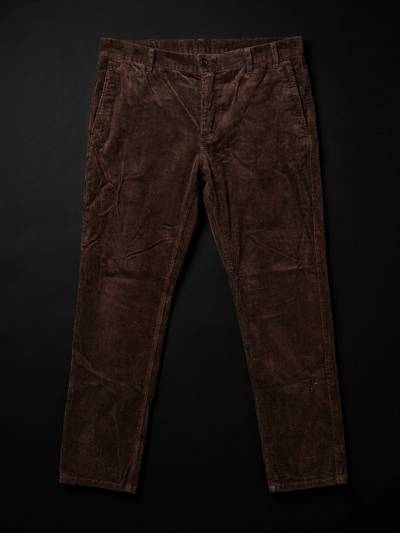
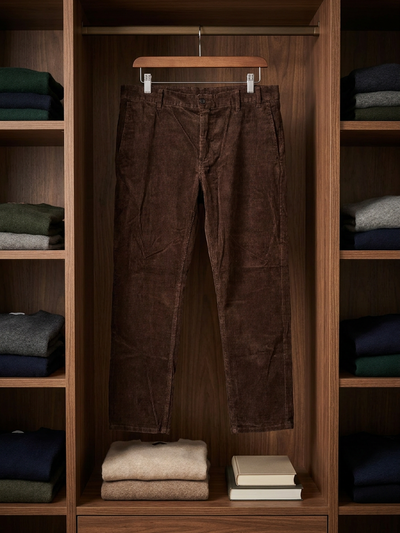


Inspect listing photographs with forensic suspicion. Check collar folds for fraying and grease discolouration. Look at the armpits for thinning and sweat marks. In knitwear, hold images up to the light to spot small holes along the waistband and cuffs. If a seller uses vague descriptors like "plenty of life left" without clear close-ups, pass on it. There will always be another one.
The eight-piece starter wardrobe
If you stripped your rail clean today, this eight-piece foundation will cover eighty percent of social and working situations across autumn, winter, and spring.
1. The Barbour Beaufort or Bedale: In sage or olive. Sized to fit over a thick jumper. It handles rain, wind, and travel without requiring delicate treatment.
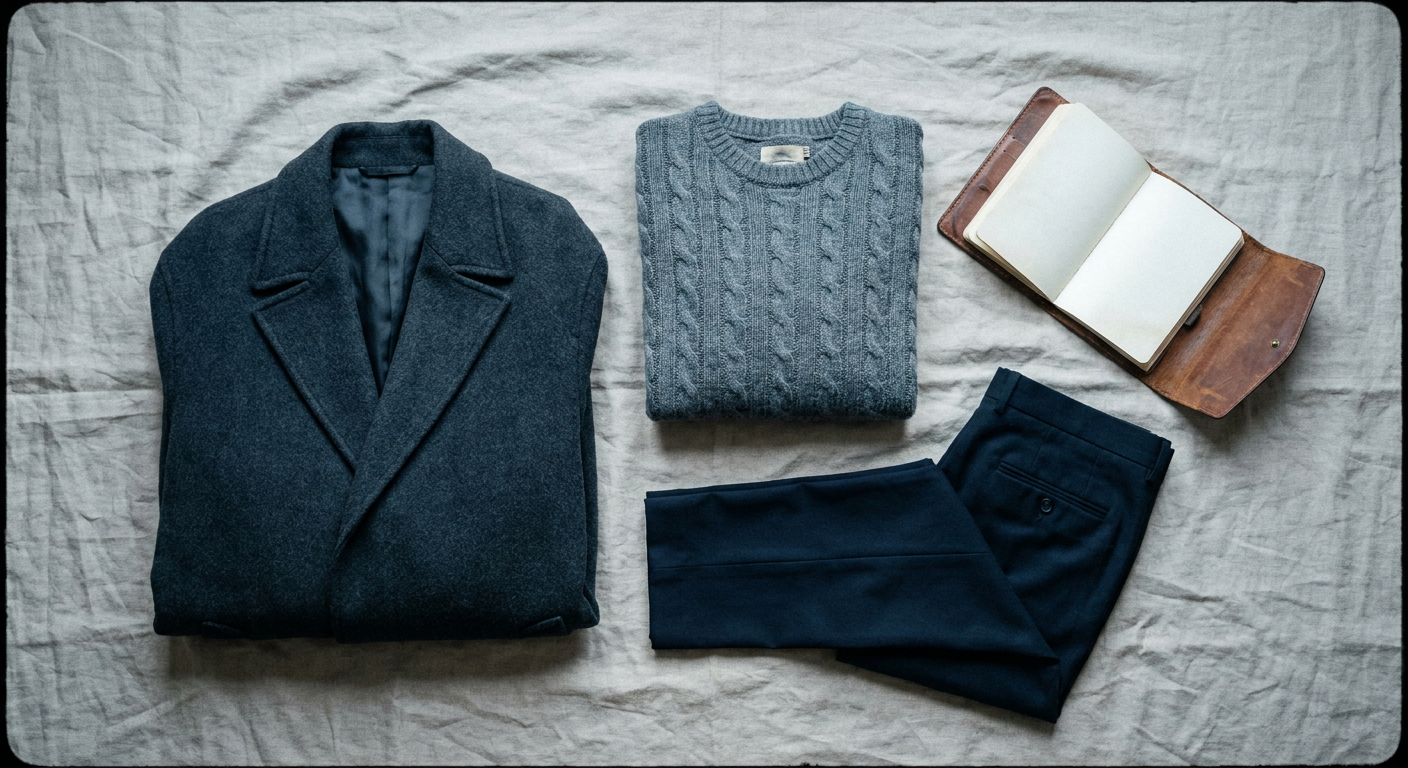
2. A heavy wool overcoat: Charcoal or navy, single-breasted, cut mid-thigh or longer. Look for older Gloverall, Aquascutum, or Margaret Howell pieces made from pure wool.
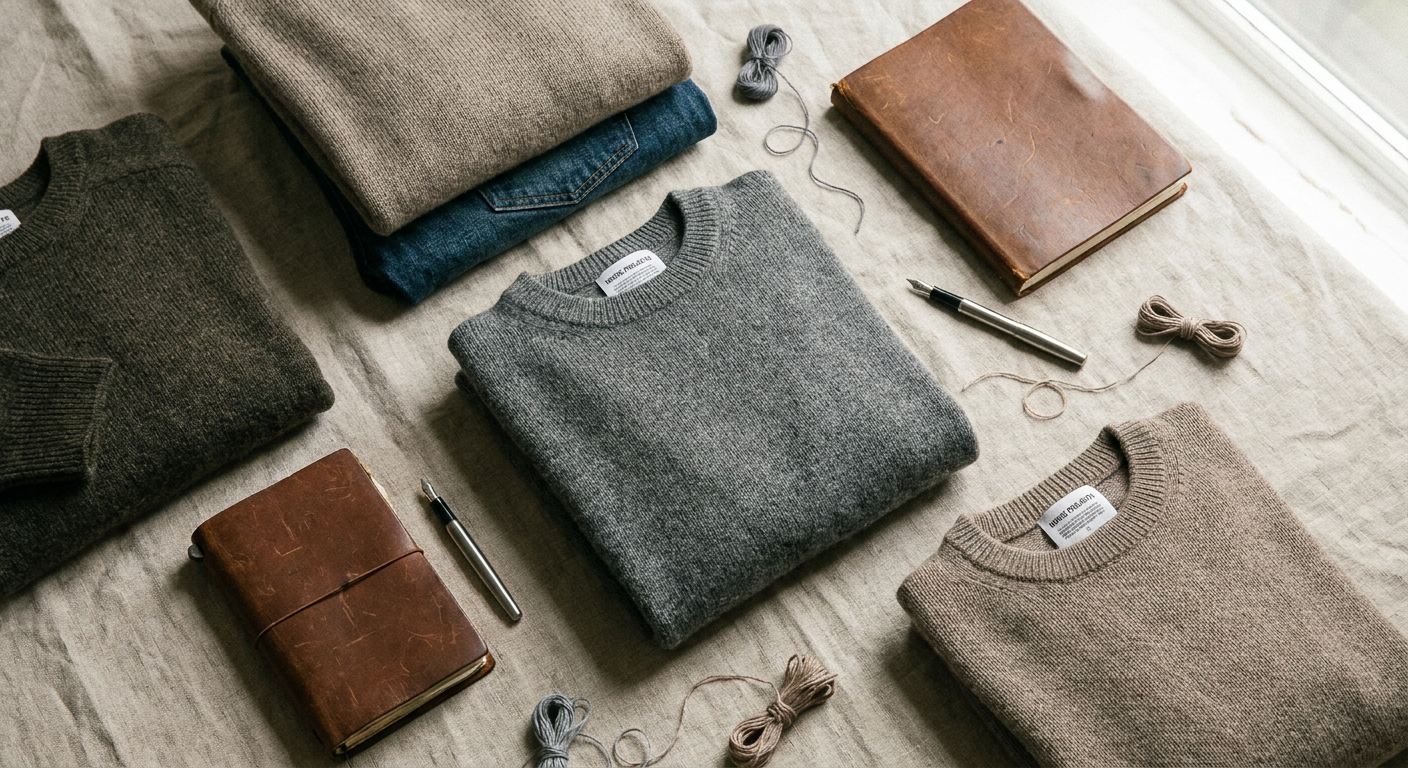
3. A Scottish Shetland crewneck: In grey, oat, or forest green. Brushed or plain. It provides warmth without weight and will last twenty years if washed cold by hand.
4. A John Smedley merino crewneck: In black or navy. Fine enough to wear under tailoring, smart enough to wear over a t-shirt for dinner.
5. Two heavy oxford button-downs: One white, one light blue. Vintage Ralph Lauren or Gitman Vintage. Wear them pressed or rumpled; the heavy cloth holds either look.
6. A.P.C. Petit New Standard or standard selvedge denim: Buy a pair that is already broken in and softened, avoiding the initial six months of rigid discomfort.
7. Cotton fatigue pants or twill chinos: Olive drab Stan Ray four-pocket fatigues, or heavy navy cotton chinos from Norse Projects. They offer an immediate alternative to blue jeans.
8. Goodyear-welted leather shoes: A pair of Tricker's Bourton brogues, Red Wing postman shoes, or Paraboot Michaels. Find a pair with minimal heel drag on the sole and uncreased vamps.
Patience is your liquidity
The high street encourages you to buy an entire outfit in twenty minutes on a lunch break. Pre-owned wardrobes cannot be built that way. If you try to assemble eight pieces in a single weekend, you will compromise on size, settle for mediocre condition, and overpay out of impatience.
Set specific search alerts. Save searches for your exact chest size and collar measurement. Wait for the right seller: someone clearing out a wardrobe who has cared for their clothes properly, not an industrial reseller shifting bulk stock without inspecting the seams. If an item does not immediately work with at least two things currently hanging in your wardrobe, leave it alone. The best pre-owned wardrobes are assembled slowly, piece by piece, by people who know exactly what they are waiting for.