music
3 minute read
Soul Jazz Records: Why the Back Catalogue Is Worth Collecting
Words by Heather June Coombs
Soul Jazz didn't just reissue records; they re-contextualised entire movements.
Beyond the Covers: Why Soul Jazz Records Matters
Soul Jazz Records isn't just a label; it's an institution. For over 30 years, Stuart Baker's outfit has excavated forgotten sounds, reissuing them with a meticulous eye and ear. They've built a back catalogue that isn't just deep, but consistently relevant. This isn't about nostalgia. It's about ensuring vital music remains in circulation.
The Archive Aesthetic
From the outset, Soul Jazz understood presentation. Their sleeve art draws from a specific, often stark, aesthetic. Photographers like Charlie Ahearn and the label's own in-house design team create covers that are instantly recognisable. This visual identity extends to the detailed liner notes, which are often mini-essays in themselves, providing crucial context for the music.
This commitment to the physical product ensures that a Soul Jazz release feels like more than just a record. It's a document. A portal. The booklets often include rare photographs and interviews, elevating the package from a simple reissue to a collectible artefact.
Sound System Culture: From Studio One to Dancehall
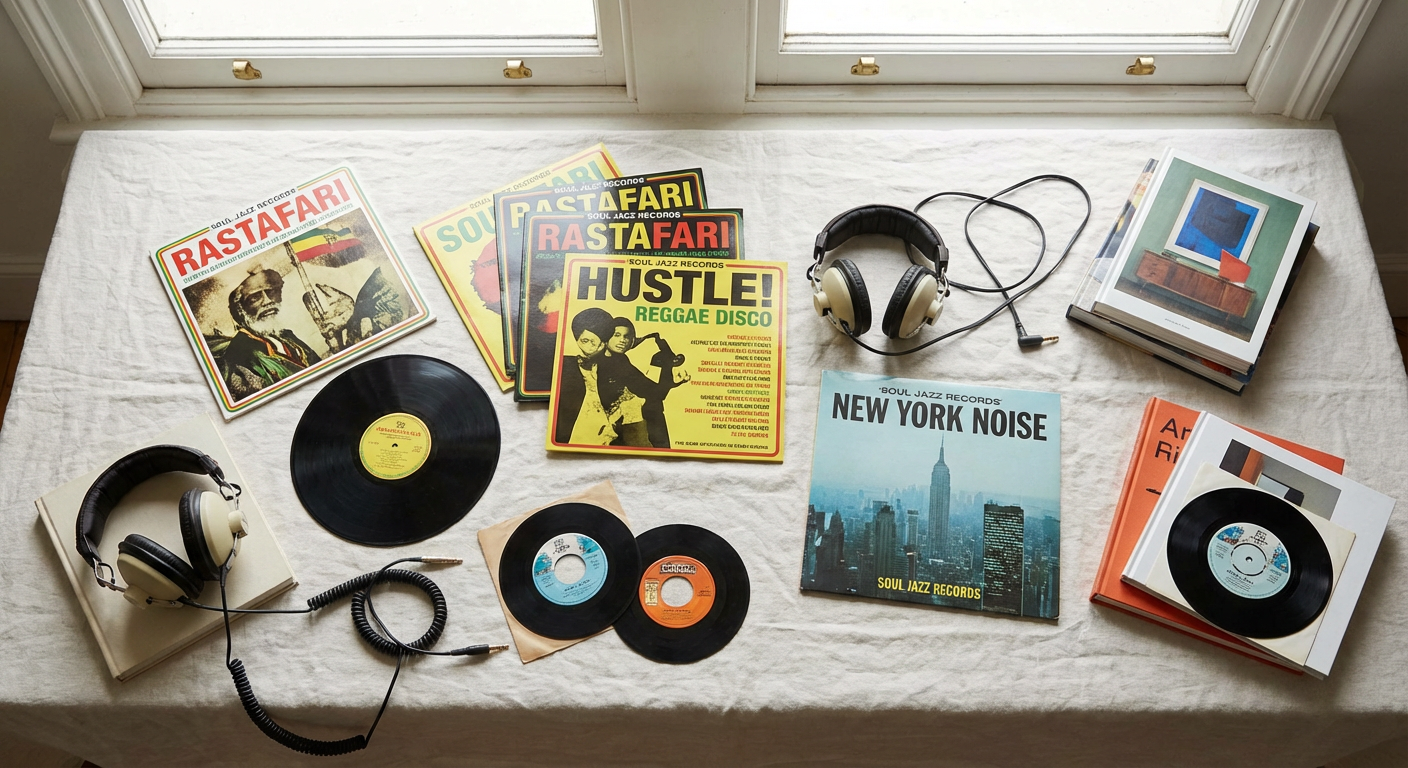
Soul Jazz's enduring impact on reggae and sound system culture is undeniable. Their Studio One series alone is essential. Through releases like Studio One Soul and Studio One Rockers, they introduced an entire generation to foundational Jamaican music, often compiling tracks that weren't readily available outside specialist channels.
They didn't stop at the roots. Their delve into dancehall – Voodoocore: The Mic Row Project or the collections surveying the output of labels like Wackies – showed a commitment to the full spectrum of Jamaican musical innovation. These aren't just greatest hits; they're historical overviews, often highlighting the producers and engineers alongside the vocalists.
Definitive Compilations: Electro, Punk, and Beyond
Where Soul Jazz truly shines is in its themed compilations. The New York Noise series, for example, is a masterclass in post-punk and no wave archaeology, charting the fertile, often abrasive, scene that blossomed in lower Manhattan. Similarly, the Brave New Waves compilations explore Canadian post-punk and new wave with academic precision.
Shop from this article

Their electro series, particularly the Electro: The Essential Electro and Freestyle Sound of Latin Freestyle New York 1980-87, mapped out the genre's genesis and evolution with unprecedented clarity. These aren't just collections of tracks; they are sonic histories, often revealing forgotten connections and influences.
The Unseen and The Undervalued
What makes the Soul Jazz back catalogue truly worth collecting is the curation. They didn't chase trends. They set them, by unearthing records that had been overlooked or simply forgotten. Think of their work on early UK punk (Punk 45 series), the forgotten Chicago house of the Larry Heard-affiliated side projects, or the deep dives into Afro-Cuban jazz.
They made the case for artists and genres that hadn't found mainstream traction, making them accessible to a wider audience while maintaining respect for the music's origins. This commitment to the edges of musical history has solidified their reputation as archivists as much as a record label.
Why Own It: Resale and Respect
Beyond the cultural significance, Soul Jazz releases hold their value. The quality of the pressings, the detailed packaging, and the often limited nature of some editions mean they are a sound investment for collectors. Copies of their more obscure early compilations or first pressings of popular reissues consistently fetch good prices on the secondary market. This isn't just about financial return; it's a testament to the enduring quality and respect afforded to the label's output.
Collecting Soul Jazz is more than accumulating records. It's about engaging with musical history, owning a slice of meticulously presented culture. It's about discovery, and the reassurance that some records are simply too important to fade away.