buying guides
3 minute read
What fading really means on pre-owned clothing — good, bad, and collector-grade
Words by Heather June Coombs
For some garments, fading is the point; for others, it's a death knell.
What fading really means on pre-owned clothing — good, bad, and collector-grade
Fading on pre-owned clothing is rarely neutral. It’s either a sought-after characteristic, a minor imperfection, or a serious flaw. Understanding the difference is crucial for both buyers and sellers, dictating everything from desirability to resale value. For some garments, fading is the point; for others, it's a death knell.
Raw Denim: The Honour of the Wearer
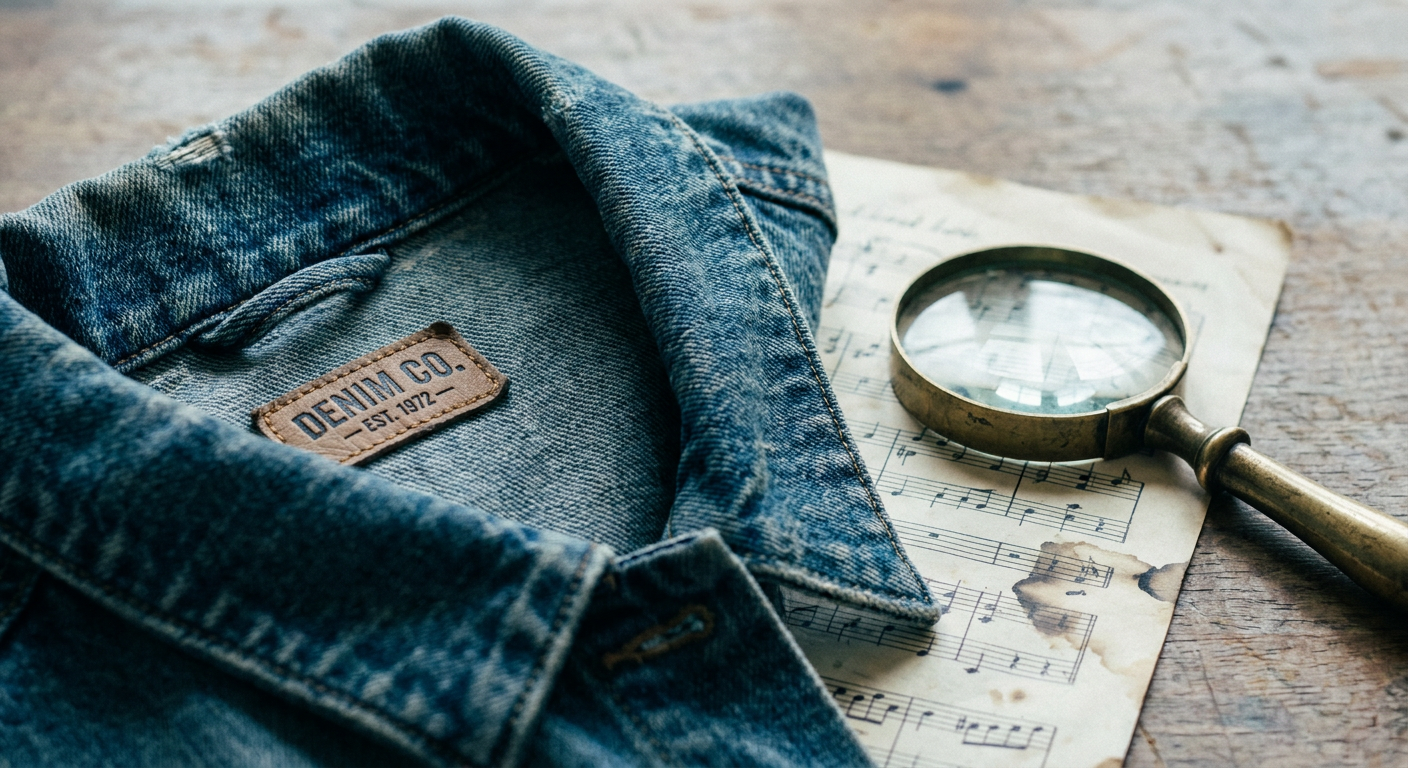
Raw denim is the prime example where fading is not just tolerated but actively desired. Its stiff, unwashed nature means the indigo dye will gradually wear away in areas of high friction. This creates a unique, personalised patina – 'fades' – that tell a story of the wearer's life. Honeycombs behind the knees, whiskers at the hips, and stacked fades around the ankles are all hallmarks of well-worn raw denim. These patterns are physical memories, impossible to replicate artificially. The more distinct and personal the fades, the more value they can add for a collector who appreciates the journey of the garment. Brands like A.P.C., Nudie, and Edwin are prime examples where a truly unique pair of faded raw denim can command a premium, especially if it belonged to a known figure or has an exceptional wear pattern. It is the antithesis of off-the-rack uniformity.
Stone Island: Patina Versus Degradation
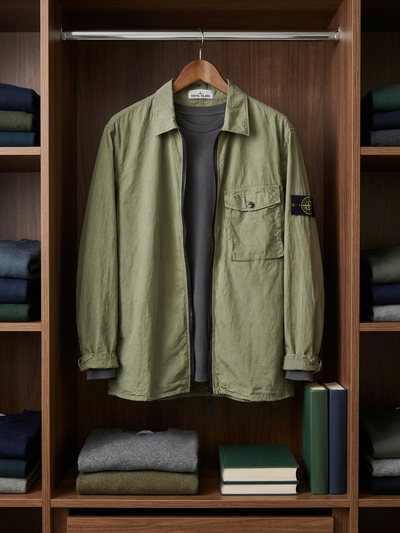
Stone Island pieces, particularly those from the Massimo Osti era, present a different challenge. While some subtle, even fading can occur over decades and contribute to a desirable patina, significant or uneven fading generally diminishes value. Stone Island fabrics are often highly technical, piece-dyed, or garment-dyed, with specific colour treatments that are integral to their design. Sun exposure is a common culprit. A jacket left in direct sunlight can develop distinct lines of fading where parts were exposed more than others. The intense colours of many Stone Island pieces, from their vibrant blues to deep greens, are particularly susceptible to UV damage. An otherwise perfect Tela Stella jacket with a sun-bleached shoulder is compromised. Collectors pay for condition, and pristine colour is a significant part of that for Stone Island.
Shop from this article


Sun Damage Versus Natural Wear Fading
It is important to distinguish between deliberate, natural wear fading and accidental sun damage. Natural wear fading occurs gradually and evenly across areas of the garment that see the most action – elbows, cuffs, seams. It tends to soften the colour rather than drastically alter it. This kind of fading often adds character, particularly to items like workwear jackets from Carhartt or Barbour, where a lived-in look is part of the aesthetic. Sun damage, conversely, is often uneven, abrupt, and can change the fabric's colour in an undesirable way, sometimes even degrading the fabric itself. Look for sharp lines, stark colour differences between exposed and unexposed areas (e.g., under a collar or flap), and a general chalkiness or dullness that doesn't align with natural wear. A jacket with a perfectly faded back but an unnaturally bleached shoulder is a clear indicator of sun damage.
Assessing Evenness: The Eye of the Collector
The key to evaluating fading lies in its evenness and distribution. For desirable fading, such as on denim, the patterns should be organic and reflect natural body movement. For other garments, an even fade across the entire piece is usually preferable to patchiness. A garment that has faded uniformly over years of washing and wear can often be more appealing than one with stark, localised fading. Check under collars, inside pockets, and beneath flaps – these areas often retain the original colour. If the contrast is too extreme, it indicates uneven fading or damage. A consistently faded garment speaks to a life lived, while uneven patches suggest neglect or poor storage. For brands like Belstaff or vintage Barbour, an all-over, gentle fade that has mellowed the original wax finish can be seen as an enhancement, adding to the garment's narrative without detracting from its structural integrity. It is about a consistent story, not a disjointed one. A piece's value is often intrinsically tied to its perceived history. For denim, that history is written in stark, personal lines of indigo loss. For other collector items, like a rare Stone Island or C.P. Company jacket, the history should be one of careful preservation, where fading is minimal and uniform, a gentle softening rather than a harsh alteration. The discerning buyer knows the difference.