brand focus
3 minute read
Why Massimo Osti pieces are worth more than people realise
Words by Heather June Coombs
His archive work from the 1970s–1990s commands collector prices because it was years ahead of its time.
The Architect of Modern Menswear
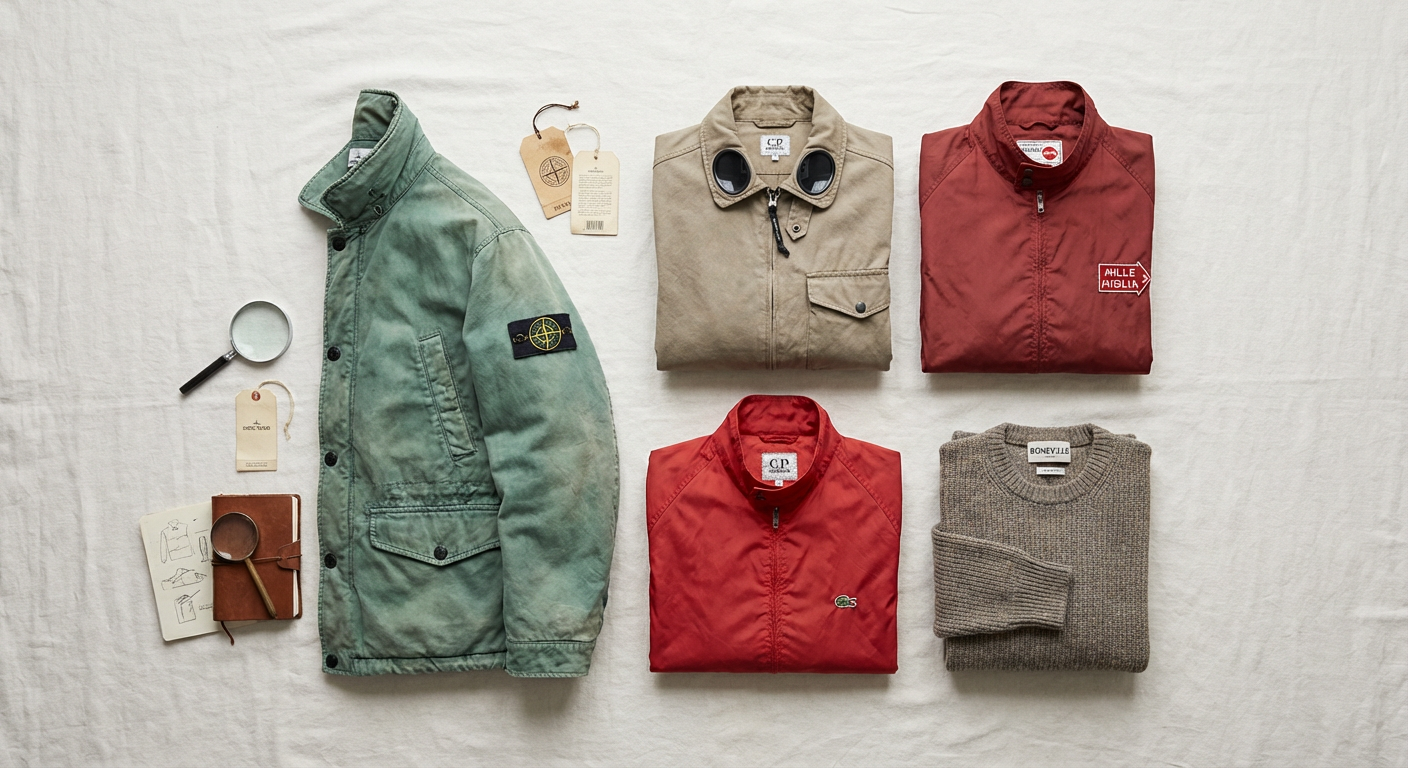
Massimo Osti’s influence on menswear is undeniable. He founded C.P. Company in 1971 and Stone Island in 1982. Many see both brands as the pinnacle of technical apparel. His work combined military utility, workwear durability, and a relentless pursuit of new fabrics and dyeing processes. These weren't just clothes; they were experiments in textiles. His pieces go beyond fashion. They are engineering. Collectors don't just buy a jacket; they acquire a piece of design history. This is why his garments, particularly from the early periods, hold their value, often exceeding original retail prices.
A Legacy Forged in Innovation
Osti’s career began in graphic design. This background informed his systematic approach to clothing design. He didn’t follow trends; he created a new paradigm. C.P. Company, originally Chester Perry, started as a vehicle for his ideas. He experimented with unconventional garment dyeing and fabric treatments. These techniques, like the iconic Mille Miglia lens goggles on C.P. jackets, defined a new aesthetic. Stone Island pushed boundaries further. The brand was conceived as a research laboratory. Osti explored industrial felt, rubberised flax, and even bronze. His early Stone Island pieces from the 1980s, especially those using Raso Gommato or Tela Stella, are now highly sought after. They represent the genesis of modern technical outerwear.
The Fabric Laboratory
Osti’s obsession with fabric was central to his work. He’d garment-dye finished garments – rather than pre-dyed fabric – a technique that was revolutionary at the time. This created a rich, irregular depth of colour that mass production couldn't replicate. Materia, his textile research company, developed over 50,000 different fabrics. Take Tela Stella, for example. It’s a cotton canvas inspired by the tarpaulins used on military trucks. Osti treated it to be wind and waterproof, then garment-dyed it in vibrant colours. Each piece told a story of its material composition. His Raso Gommato, a cotton satin bonded with a polyurethane film, offered superb weather protection and a unique texture. These are the kinds of details serious collectors look for.
Key Years and Authenticity
The most desirable Osti-era pieces are typically from the 1970s, 1980s, and early 1990s. For C.P. Company, look for labels from Chester Perry and early C.P. Company. For Stone Island, the early green-edge badges, followed by the white-edge, signify prime Osti design. The condition of the iconic compass badge on Stone Island pieces is a crucial factor in value. Authenticity is paramount. Early Stone Island garments have unique internal labels indicating fabric composition and design. Often, these pieces feature integrated functionalities like multiple pockets, articulated sleeves, and unique closures that later iterations simplified or removed. Knowing the nuances of badge evolution, exact fabric names, and stitching details is vital.
Shop from this article

Why Prices Keep Rising
The appreciation for Osti’s work isn't niche anymore. It's mainstream. A generation who grew up with his brands now have disposable income and a desire for genuine heritage. His limited production runs for specific fabrics mean scarcity. These aren’t items mass-produced for seasonal trends; they are design artefacts. The recent resurgence in popularity of both C.P. Company and Stone Island has pulled attention back to their origins. Modern collections often take direct inspiration from Osti's archive. This drives a new wave of buyers to seek out the originals. A Stone Island Marina jacket from 1985 in good condition can fetch four figures. It's a statement, not just an expensive coat. Collecting Massimo Osti’s work is like collecting art. Each piece reveals a layer of his textile genius. They are investments in design, engineered to last, and tell a story of singular vision. His work remains the benchmark for technical apparel.
Related articles