barbour
4 minute read
Barbour Wax Jacket Care: How to Rewax and What to Look For Pre-Owned
Words by Heather June Coombs
A well-maintained Barbour can last decades. A neglected one will just look tired.
The Enduring Appeal of Waxed Cotton
A Barbour wax jacket is more than just outerwear. It's a statement. It's practical. It's been worn by everyone from farmers to royalty, from Steve McQueen to Daniel Craig. The unmistakable feel of the waxed cotton, the distinct smell, the subtle way it moulds to its owner – these are not features. They are characteristics. And like any good tool or garment built to last, it performs best when looked after. Rewaxing isn't just about waterproofing. It’s about heritage and extending the lifespan of a jacket that was designed to be passed down. A well-maintained Barbour can last decades. A neglected one will just look tired.
Why Waxing Matters
The wax isn't a sealant; it’s a living finish. Over time, friction, environmental exposure, and general wear will cause the wax to dry out and rub off, particularly around seams, pockets, and cuffs. This is where water ingress can start. Left untreated, the cotton itself degrades. Rewaxing replenishes the fabric's protective layer. It restores the water resistance and breathability. Crucially, it also brings back the jacket's deep, rich colour and that characteristic robust feel. It's an annual ritual for many and a rite of passage for others.
Choosing Your Barbour Wax
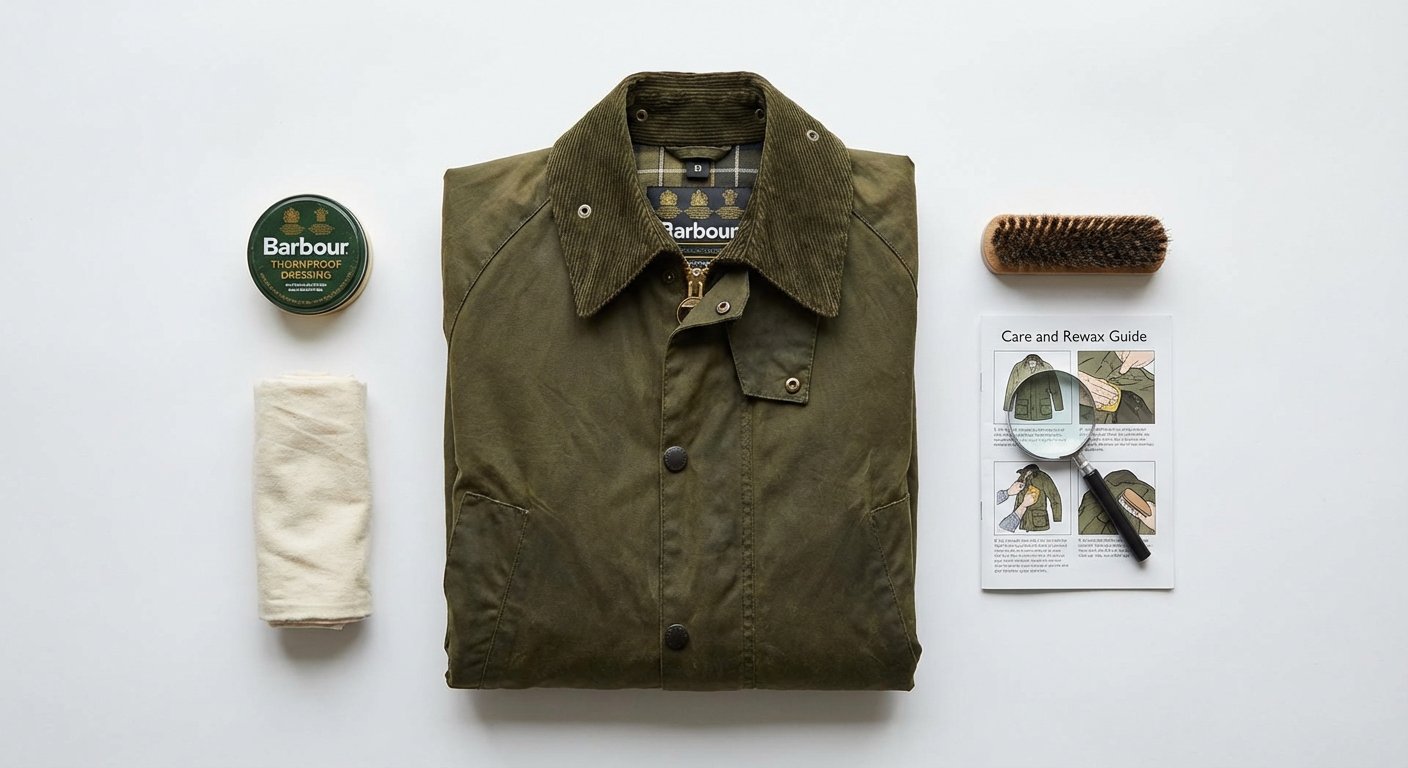
Barbour produces its own tins of Thornproof Dressing, the gold standard. It's the same wax applied at the factory. Don't use alternative waxes. They might contain different solvents or compounds that could damage the cotton or alter its appearance. Stick to the original. Each tin typically contains enough wax for one jacket. Before you start, ensure your jacket is clean and dry. Brush off any surface dirt. Use cold water to wipe down any stubborn grime. Hot water washes away the old wax, changing the fabric’s composition. Air dry thoroughly.
Shop from this article
The Rewaxing Process
You'll need a warm, well-ventilated space, a hairdryer, a clean cloth or sponge, and your tin of Thornproof Dressing. Some prefer a slow cooker to melt the wax evenly. Avoid direct flame. Melt the wax. The entire tin needs to be liquid. A bain-marie method (tin in a bowl of hot water) works, or place the open tin in a pan of simmering water. The wax should be the consistency of thick oil. Using the sponge or cloth, apply the melted wax evenly to one section of the jacket at a time. Pay close attention to seams, folds, and high-wear areas like cuffs and the collar. Work the wax into the fabric in broad, circular motions. Don't apply too thickly. It won't absorb and will leave a sticky residue. Once a section is covered, use a hairdryer on a low setting to gently melt the wax further into the fabric. This ensures an even finish and helps remove any excess. Continue this process across the entire jacket. When finished, hang the jacket in a warm place for 24-48 hours to allow the wax to cure and fully absorb. Expect a slight, pleasant odour during this time.
Buying Pre-Owned: What to Look For
When buying a pre-owned Barbour, the condition of the wax is your first clue. A well-cared-for jacket will show an even, slightly pliable wax finish. Avoid anything with a cracked, stiff, or overly dry appearance. This indicates neglect and potentially deeper fabric damage. Check critical wear points. Look at the elbows, cuffs, pocket edges, and the bottom hem. These areas often show signs of abrasion where the wax has worn through, or the cotton has frayed. Small frays are repairable; large holes are not always economical. Inspect the lining. Tartan linings can fray, especially around the lower hem. Tears in the lining are common, but check if they're extensive or in high-stress areas like the armpits. A missing zip pull, or a broken zip, is a simple fix. A broken main zip slider, however, signifies a more involved repair. Always check the poppers and zip. Rust on the poppers is a red flag for prolonged damp storage. A stiff or seized zip can often be revived with a touch of wax or specialist lubricant, but test it first. Finally, consider the smell. A faint waxy aroma is normal. A strong, musty, or smoky smell suggests poor storage and is difficult to remove. This is the one dealbreaker you can’t fix with a tin of wax.
A Jacket for Life
The Barbour wax jacket is an investment. It's not about fleeting trends. It’s about utility, longevity, and a particular kind of understated style. By understanding its maintenance and what to look for pre-owned, you’re not just buying a jacket; you're buying into a tradition. And ensuring it lasts another thirty years.