outerwear
3 minute read
C.P. Company — why the Goggle Jacket is still worth what people pay for it
Words by Heather June Coombs
The Goggle Jacket was not a style statement first; it was a pure exercise in functional design, born from necessity and observation.
The Enduring Appeal of the Goggle Jacket
The C.P. Company Goggle Jacket might be one of the most recognisable garments of the last four decades. Born from Massimo Osti’s restless functionalism, it’s a piece of outerwear that has transcended its original context and become a cultural marker. For many, it's the defining C.P. Company item. It still commands serious prices on the pre-owned market, and for good reason.
A Design Born from Function
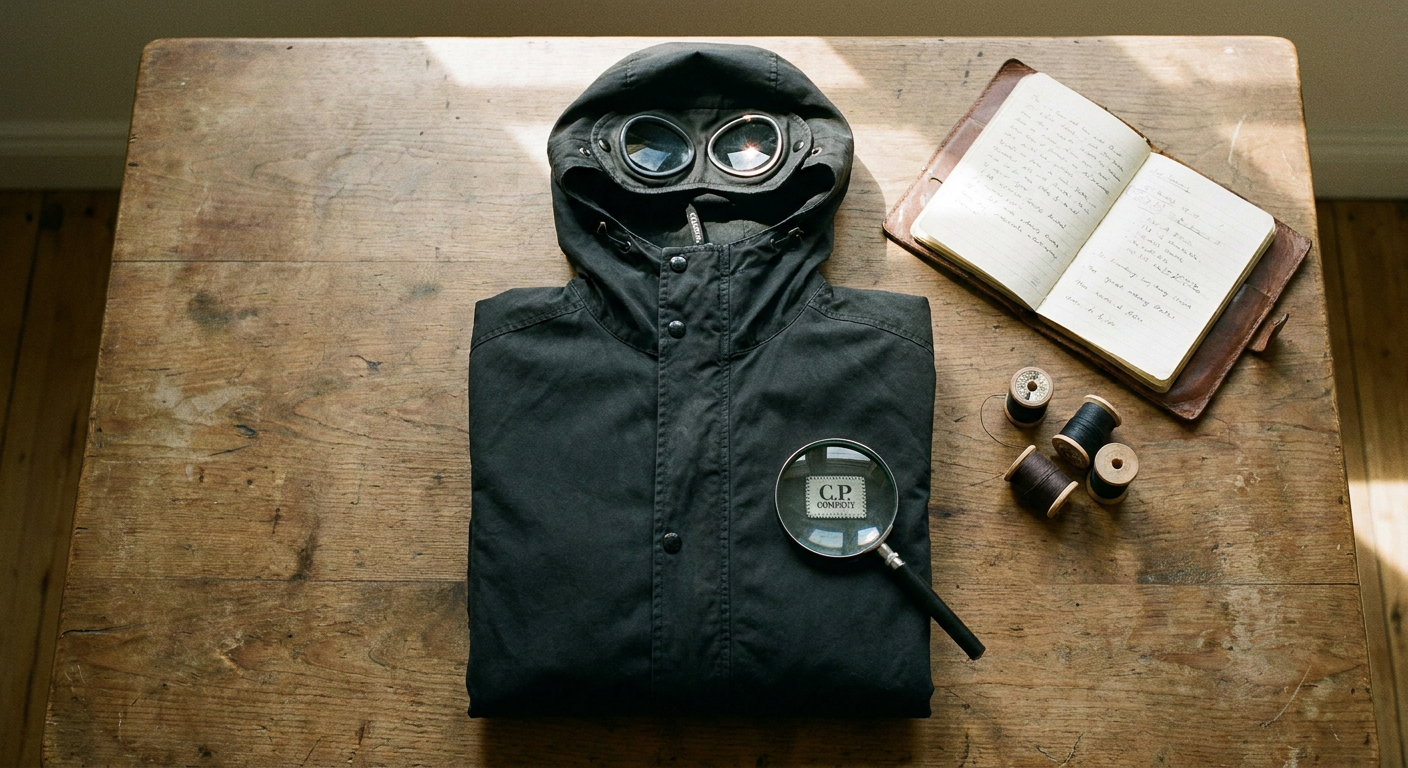
Osti’s vision for C.P. Company was always about utility first. He founded Chester Perry in 1971, later renamed C.P. Company. His approach to design was almost industrial: studying military uniforms, workwear, and sportswear for inspiration, then applying innovative textile and dyeing processes. The Mille Miglia jacket, introduced in 1988, was the first garment to feature the now-iconic goggles. The design was directly inspired by the protective hoods worn by drivers in the Mille Miglia endurance race, an Italian classic. These early racing hoods incorporated lenses to shield the eyes from dust and debris. Osti adapted this concept, integrating two clear lenses into the hood of a jacket, along with a smaller lens on the wrist to check a watch – the 'watchviewer'. It was a logical, if audacious, evolution of performance outerwear.
Iconic Details and Technical Innovation
Beyond the goggles, the jacket's design is riddled with considered details. Early versions featured multiple pockets, adjustable cuffs, and robust closures, all contributing to its practical appeal. The fabric development, however, was where C.P. Company truly excelled. Early Goggle Jackets were often made from proprietary blends, garment-dyed to achieve unique, rich colours that couldn't be replicated by standard dyeing methods. Later iterations introduced fabrics like 50 FILI, a nylon/cotton blend that was weather-resistant and rugged, and various forms of Membrana, a lightweight nylon with a polyurethane film. Each fabric choice was a deliberate push towards better weather protection, breathability, or durability. This commitment to textile innovation is a fundamental part of the Goggle Jacket’s heritage and why it performs years later.
Shop from this article
Which Versions Hold Their Value
The earliest Mille Miglia jackets from the late 80s and early 90s are highly sought after. Collectors look for specific details: brown-edge lens surrounds, the integrated watchviewer, and the particular feel of those original garment-dyed heavy cottons or early nylon blends. Condition is paramount, but minor wear on these seminal pieces is often forgiven given their age and rarity. Later models, particularly those featuring Membrana or other advanced fabrics from the early 2000s, also retain strong value. Collaboration pieces, though less frequent than with Stone Island, can also command premiums. Originality and good condition generally trump extreme rarity. A well-preserved standard issue jacket will often fetch more than a rare, but damaged, limited edition.
Sizing and Condition on the Pre-Owned Market
C.P. Company sizing can be inconsistent, especially across different decades and manufacturing runs. Generally, they lean towards a European fit, which can be slightly snugger than typical UK high street brands. Always check measurements against a jacket you already own. Pit-to-pit, shoulder, and sleeve length are crucial. When assessing condition, the goggles themselves are a key area. Scratched or clouded lenses significantly impact value. Seam integrity, zip functionality, and the presence of all original components – especially the watchviewer – are also critical. Fading should be consistent; patchy discolouration indicates poor care. A clean bill of health on the fabric and hardware usually means it’s a safe bet. The Goggle Jacket remains a formidable piece of design. It’s not simply a jacket with lenses; it represents a philosophy of functional innovation and distinctive aesthetic that very few brands ever achieve. Its value on the pre-owned market is a direct reflection of that lasting impact.