brand focus
3 minute read
How to Spot a Fake Stone Island Badge
Words by Heather June Coombs
The reissue is fine. The original is better. Here is why.
Spotting a fake Stone Island badge is not an academic exercise. It marks the difference between genuine quality and a convincing imitation. For any serious collector, or even just someone buying for personal use, the badge is the quickest tell. Get it wrong, and you have overpaid for something substandard.
The Stitching Density and Thread Count
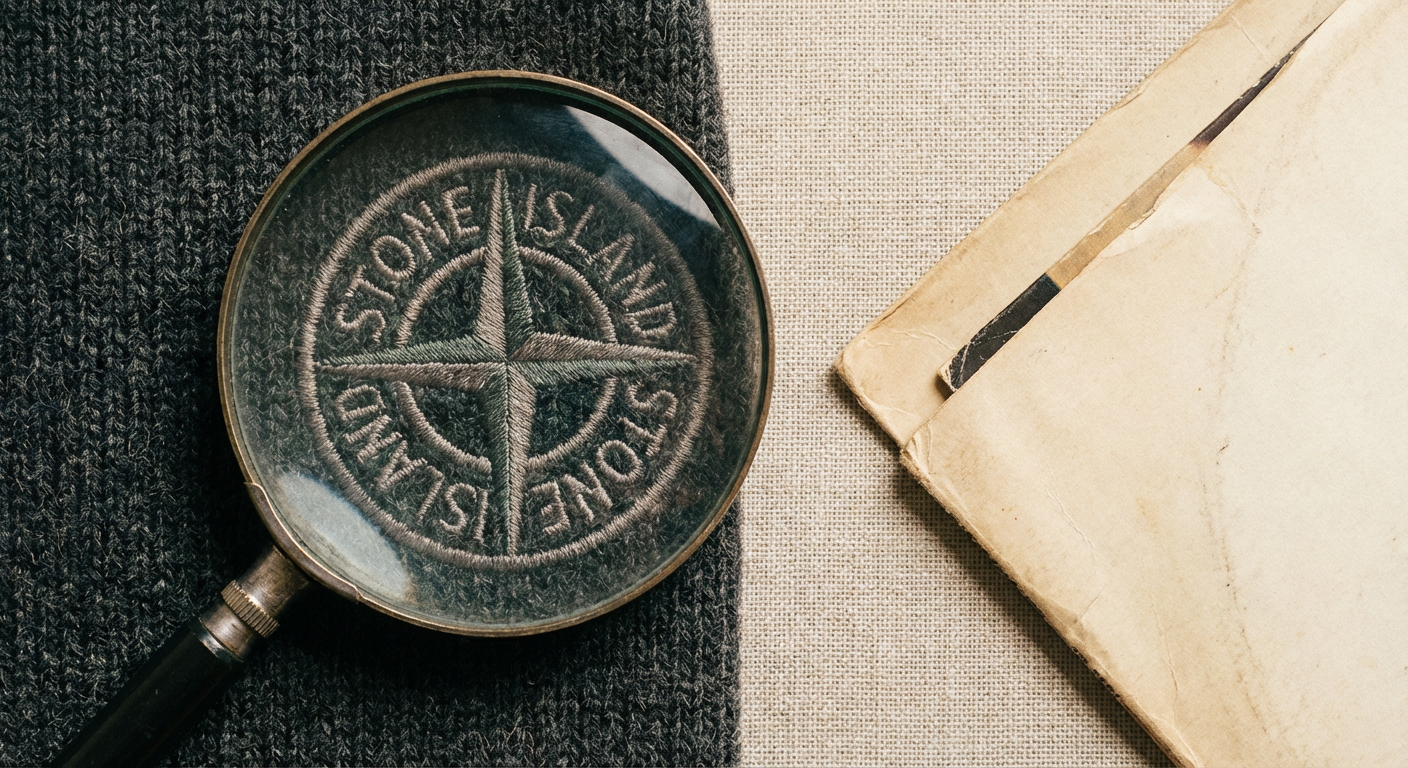
Genuine Stone Island badges use a specific stitch count. The embroidery should be dense, with no loose threads or uneven gaps. Hold it up to the light; the fabric behind the stitching should be almost entirely obscured. Fakes often have sparser stitching, making the underlying fabric visible. This is a cost-cutting measure. It’s also the first thing your eye picks up on a bad reproduction.
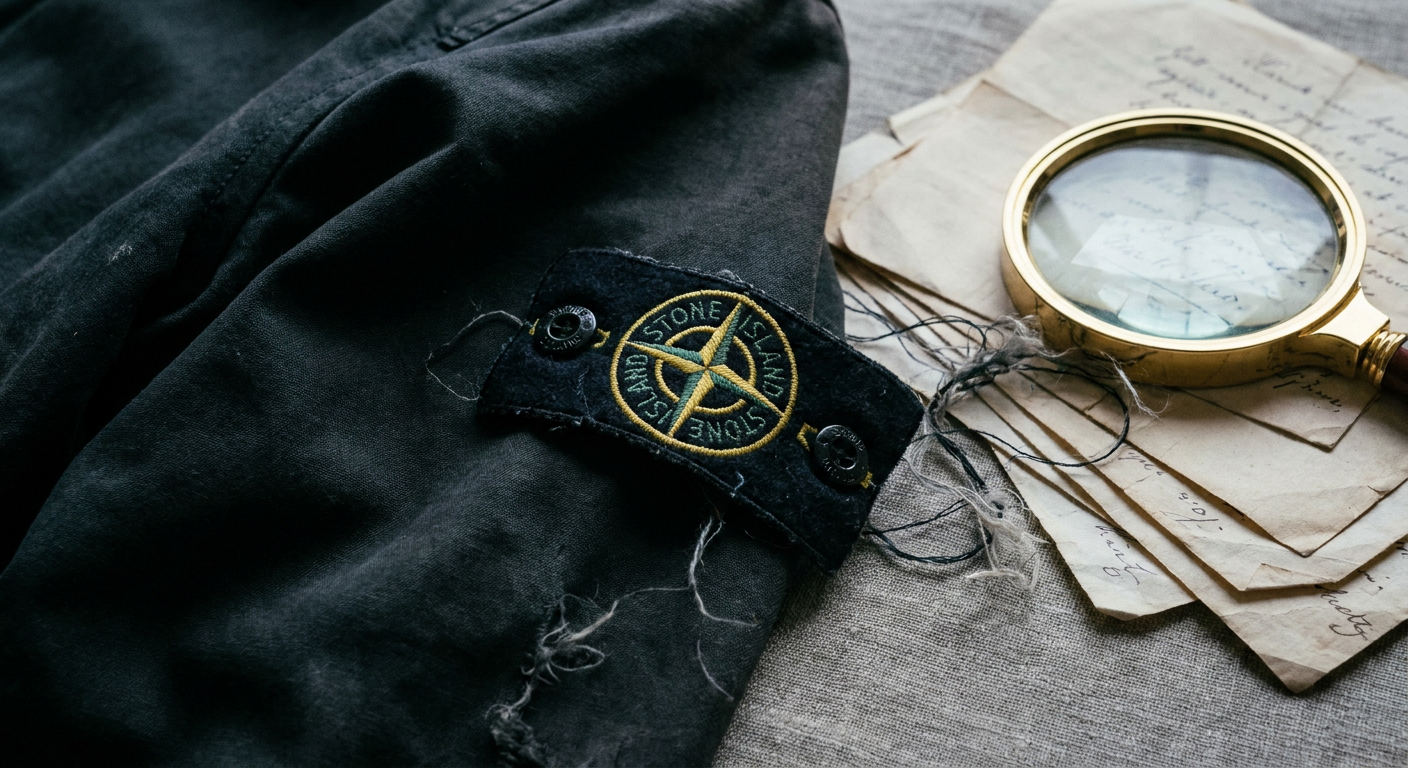
Look at the compass rose. The lines should be crisp and well-defined, not blurred or frayed. The star at the centre of the compass should be a distinct shape, not a blob. The yellow thread in the authentic badge is a specific, vibrant shade. Replicas frequently miss this, opting for a duller, more mustard tone.
Button Quality and Placement
Genuine badges attach with four buttons. These buttons are typically made of a hard, resilient plastic. They feature the Stone Island logo subtly embossed around the rim, or sometimes a simple star. The feel should be solid, not flimsy. If they feel cheap, they probably are.
The stitching used to attach the buttons should be neat and consistent. Each button should be securely sewn on, with no wobbling. Often, on fake badges, the buttons are either generic, poorly attached, or use a cheaper plastic that feels brittle to the touch. Pay attention to their spacing on the garment; they should be evenly placed, about 4.5cm apart from the centre of one button to the centre of the next, on the two top buttons. This applies to the lower pair too. Overall, the distance between the two parallel rows of buttons is around 11cm center-to-center.
The Badge Fabric and Material Feel
An authentic Stone Island badge has a specific texture. It's a blend of cotton and polyester, strong but not overly stiff. It feels durable, slightly rugged. Counterfeit badges often use a cheaper, thinner felt or a polyester blend that feels flimsy and can fray easily at the edges. Experience with genuine articles helps here. If it feels off, it probably is.
The rear of the badge. This part is often overlooked. Genuine badges will have a clean finish on the reverse, with the threads neatly tucked. There should be a small, black rectangular label sewn into the back, bearing the "Stone Island" wordmark. Fakes often have messy backing with visible knots, or no backing label at all. If the rear looks like a dog's dinner, so does the badge.
Shop from this article
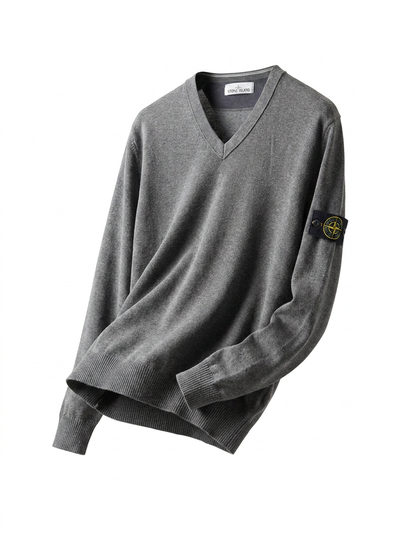
The Green Edge and Lettering Details
The green border of the badge is a key area for scrutiny. The green on a genuine badge is a precise shade. It is deep and consistent. On fakes, it’s often a brighter, almost luminous green, or a dull, washed-out shade. The edge itself should be cleanly cut and tightly finished, with no loose threads escaping.
Examine the lettering: "STONE ISLAND" and "MARINA" (if applicable). The font must be correct. The spacing between the letters (kerning) should be even. On many fakes, the letters can be too close, too far apart, or the font itself is slightly off. The 'S' and 'N' are often giveaways. They should appear solid, no gaps in the embroidery. The white thread used for the lettering on the main black badge section should be vibrant, not greyed or faded.
The early 90s badges, sometimes referred to as 'green edge', are particularly sought after. They feature a slightly lighter green border and their own distinct stitching characteristics. Learning to differentiate these specific historical variations from contemporary fakes requires a deeper knowledge of the brand's evolution. It’s not just about what a modern badge looks like; it’s about understanding the specific era it purports to represent.
Checking the Hologram and Certilogo (if present)
Newer Stone Island garments include a Certilogo QR code and a holographic tag. This is the most definitive authentication method. Scan the QR code; it should take you to the Certilogo website which will confirm authenticity. If the code is missing, doesn't scan, or leads to a generic page, flag it immediately.
The hologram itself is intricate. It should show a clear image. Fakes often have blurrier, less detailed holograms, or none at all. While older items won't have this, for any garment produced in the last decade, its absence or failure is a critical warning sign. Do not ignore it.
A bad badge compromises everything else on an otherwise good piece. Get the badge right, and the rest usually follows. It is the brand's calling card. Learn it, and avoid the fakes.