brand focus
2 minute read
Stone Island badge — original, reproduction, or replacement?
Words by Heather June Coombs
A badge fixed with standard sewing thread all the way through the badge can be a red flag.
The Badge: First Impressions Matter
The Stone Island badge is a small piece of fabric, but it carries a lot of weight. It’s the first thing many people look for. For a new collector, it can be a minefield: original, replica, replacement. Some are easier to spot than others. Knowing the subtle differences separates a £300 jacket from a £50 fake.
Stitching Patterns and Thread
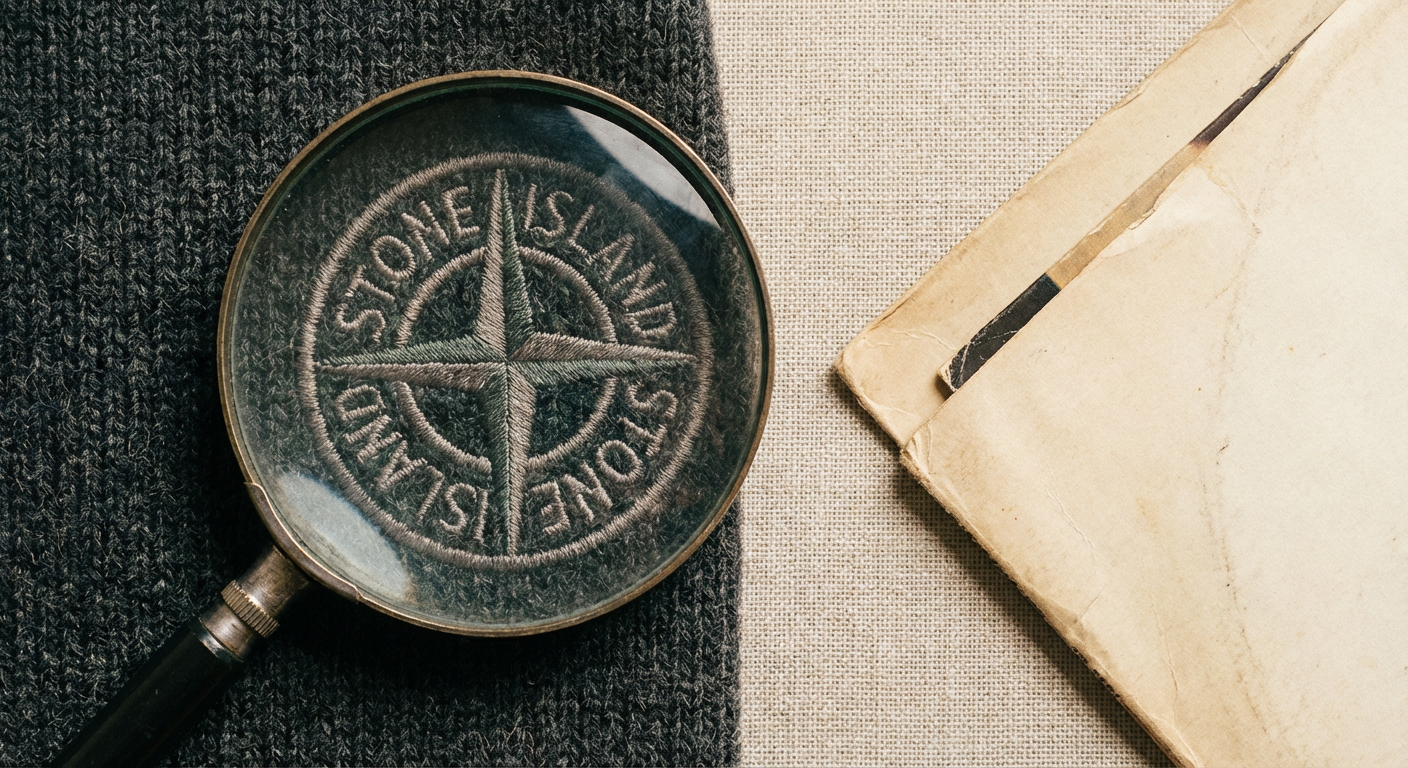
Examine the stitching on the badge itself. Early badges (pre-2000s) often have a slightly less refined finish than modern ones. The yellow stitching outlining the compass rose and the green circle on a genuine badge should be consistent. On fakes, these lines can be wobbly or inconsistent in thickness. The thread colour for the compass rose should be a specific shade of yellow, almost mustard, not bright primary yellow. The ‘Stone Island’ text uses a darker, almost military green thread. Pay attention to the density of the stitching; fakes often have looser, less dense thread work.
The Backside: Labels and Magnetism
Flip the badge over. Genuine badges will have a unique black rectangular tab on the reverse, often with a white border. This tab is sewn onto the badge itself, not glued. Older badges (pre-2010 roughly) sometimes feature a small, grey square ‘magnetic’ patch underneath the tab. This patch itself is not actually magnetic in the common sense, but rather has a metallic thread content which allowed machines in official stores to register the garment. It's a subtle detail often missed by counterfeiters. Newer badges do not have this metallic patch, so its absence on a recent piece does not indicate a fake. Its presence on an older piece is a good sign.
Shop from this article

Replacement Badges: The Good and The Bad
Sometimes, a genuine Stone Island garment comes with a replacement badge. Stone Island has sold official replacement badges for years. These are genuine and perfectly acceptable. The key is how they are attached. A professionally re-applied original badge will have stitching that mirrors the original application: four distinct 'buttonhole' style stitches, one in each corner, often with a slightly thicker thread than standard sewing cotton. This is crucial. A badge fixed with standard sewing thread all the way through the badge can be a red flag. It suggests someone has either applied a fake badge or re-attached a genuine one haphazardly. Look for the distinct, heavy-duty stitching, not a simple sewing machine row.
The Fabric and Weave
Genuine badges are made from a specific blend of cotton and polyester, giving them a slight textured feel. The weave should be tight and consistent. Hold it up to the light; there shouldn't be any loose fibres or uneven areas. Counterfeit badges often use cheaper, thinner fabric that feels flimsy or overly stiff. The embroidered details on genuine badges should feel tactile, almost raised, rather than flat against the fabric.
Context Is King
Finally, consider the garment itself. Does the badge on its own feel authentic, but the jacket screams fake? The badge can be swapped. Genuine Stone Island jackets have distinctive hardware, fabric, and internal labels. If an authentic-looking badge is on a garment with poor quality zips, thin material, or sloppy internal stitching, the badge is likely a standalone original applied to a fake. Always assess the entire garment, not just its most visible identifier.