brand focus
3 minute read
Maharishi: A Brief History and Why the Early Pieces Are Worth Finding
Words by Heather June Coombs
Maharishi occupies a peculiar corner of British streetwear. It's not Stone Island. It's not a sportswear giant. It carved out its own niche in the late 90s and early 00s with an aesthetic that blended military utility, Eastern philosophy, and an uncompromising approach to fabrication. A lot of that early work was genuinely ahead of its time, and it still holds up.
Harder to find now, but worth the hunt, those original pieces represent a high point for a brand that always did things its own way.
The Dragon and the Snopants: Early Days
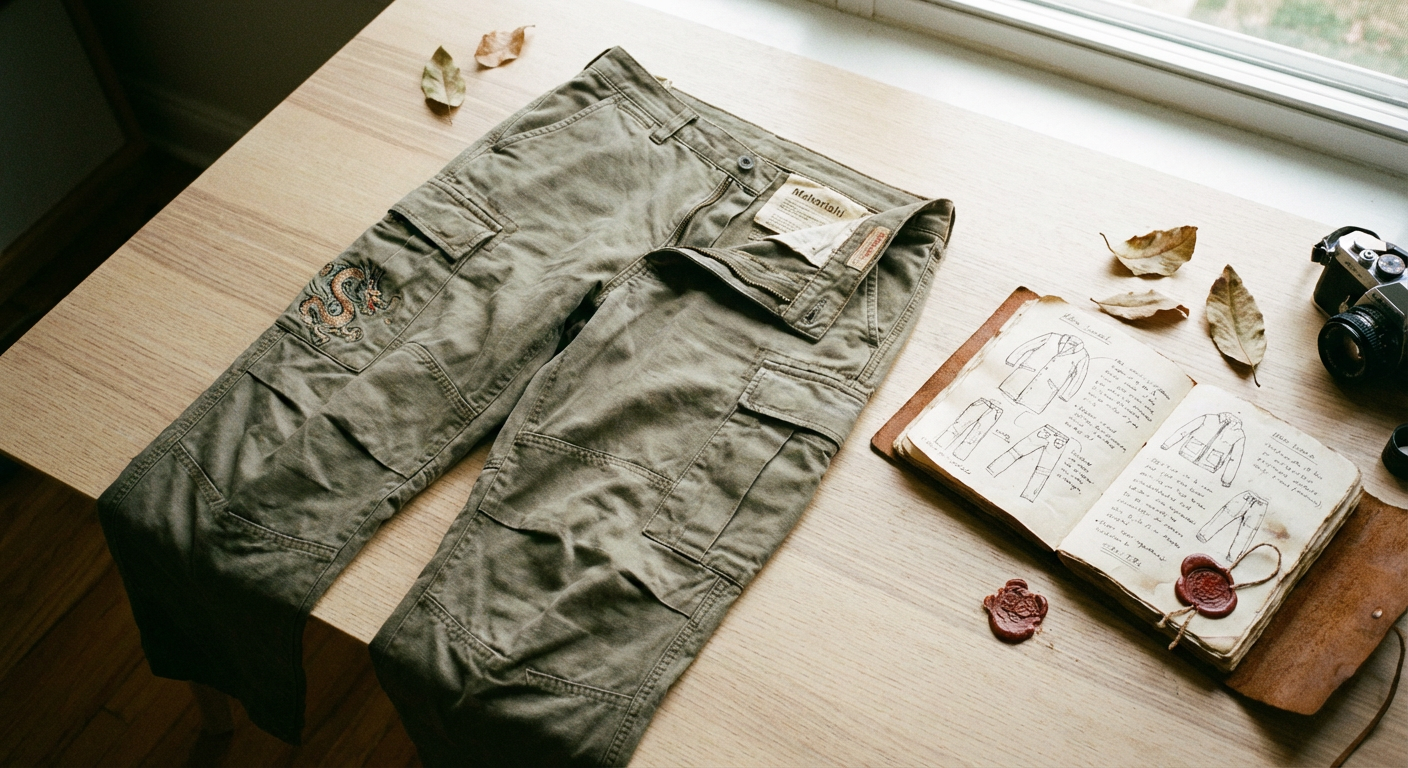
Hardy Blechman launched Maharishi in 1994. The initial focus was workwear, utilitarian designs that prioritised function. But it quickly evolved. By 1996, the iconic 'Snopants' appeared – trousers with internal drawstrings to adjust length and width, allowing them to be worn cuffed, uncuffed, or as shorts. This was pure innovation. They weren't just a design detail; they offered versatility few other brands could touch.
Parallel to this, Blechman developed a distinct aesthetic heavily influenced by Eastern motifs and military surplus. Dragon embroidery, often intricate and oversized, became a signature. These weren't subtle pieces. They were statements. They blended camouflage patterns with pacifist messaging, a deliberate contradiction that ran through much of the brand's early output.
The fabrics were often as important as the design. Organic cottons, hemp, and later, innovative recycled nylons were common. Maharishi pushed ethical production long before it was standard practice. This wasn't about trend-following; it was integral to the brand's philosophy.
DPM: Disruptive Pattern Material
Blechman's obsession with camouflage led to his magnum opus: DPM: Disruptive Pattern Material. Published in 2004, this 944-page tome is a definitive history of camouflage. It’s not just a book; it’s a manifesto. It positions camouflage not merely as military gear but as a design language, a natural pattern, and a cultural phenomenon.
This academic approach informed Maharishi's own use of camouflage. They didn't just reproduce standard patterns. They reinterpreted them, often with hidden motifs or unusual colour palettes. Think subtle reflective elements or tonal variations that only reveal themselves in certain light. This attention to detail marked early collections.
These were often pieces built to last. Reinforced stitching, durable zips, and heavy-duty materials meant that a Maharishi jacket or pair of Snopants from the late 90s often survives in better condition than contemporary items from other brands.
Shop from this article

Those early Maharishi pieces weren't just clothes; they were artefacts of a particular moment in British design.
Why Find the Archive?
The early Maharishi designs carry a weight the newer collections sometimes lack. The innovation in cut, especially the Snopants, felt genuinely fresh. The embroidery work on jackets and trousers was often hand-finished, making each piece subtly unique. There was a directness to the anti-war messaging, often delivered through the very patterns of war, that felt authentic.
The fabrics tell a story too. Finding an early 'mahatech' piece or an organic hemp blend means owning a part of their commitment to sustainable production when few others were bothering. These weren't cheap clothes when new, and the quality reflects that.
It's also about collecting. The brand’s influence is clear in later streetwear and even high fashion. To own an original is to own a piece of that lineage. The sheer audacity of putting a gigantic, intricately stitched dragon across the back of a military-grade flight jacket remains striking.
Authenticity and Condition
Given the intricate detailing and specific fabric choices of early Maharishi, authenticity is usually straightforward. Look for internal labels that clearly state 'Maharishi' and fabrication details. Japanese-made pieces or those with specific DPM references tend to be strong indicators of premium lines.
Condition is key with any pre-owned purchase, but particularly for a brand like Maharishi where utility was central. Check zips, drawstring integrity on Snopants, and any wear on embroidery. A well-cared-for piece will still feel robust.
These pieces aren't for everyone. They demand attention. But for those who appreciate the intersection of military history, Eastern symbolism, and genuinely inventive design, early Maharishi represents a high point in British streetwear.
It's a brand that understood sustainability, utility, and aesthetic impact long before the mainstream caught up. That legacy is still visible in the strong designs and durable construction of their original collections.
Related articles