brand focus
4 minute read
Stone Island and football — why the brand means something different in the UK
Words by Heather June Coombs
In Milan, it was high-end casual wear for affluent teenagers outside burger bars. In Britain, it was a hard-earned badge of tribal identity.
Walk into a bar in Milan wearing a Stone Island Raso Gommato jacket, and nobody assumes you are looking for a fight. Do the same on a cold Saturday afternoon in Newcastle, Leeds, or Glasgow, and the room reads you differently. The compass patch on the left sleeve carries a psychological charge in the UK that does not exist anywhere else in the world.
That charge was not invented by an advertising agency. Massimo Osti never drew up a marketing plan targeting working-class football supporters in northern England. He was an Italian graphic designer obsessed with military utility, industrial canvas, and fabric dyeing techniques. Yet for over forty years, his creation has been the unofficial uniform of the British terrace.
From Italian Tarpaulins to European Away Days
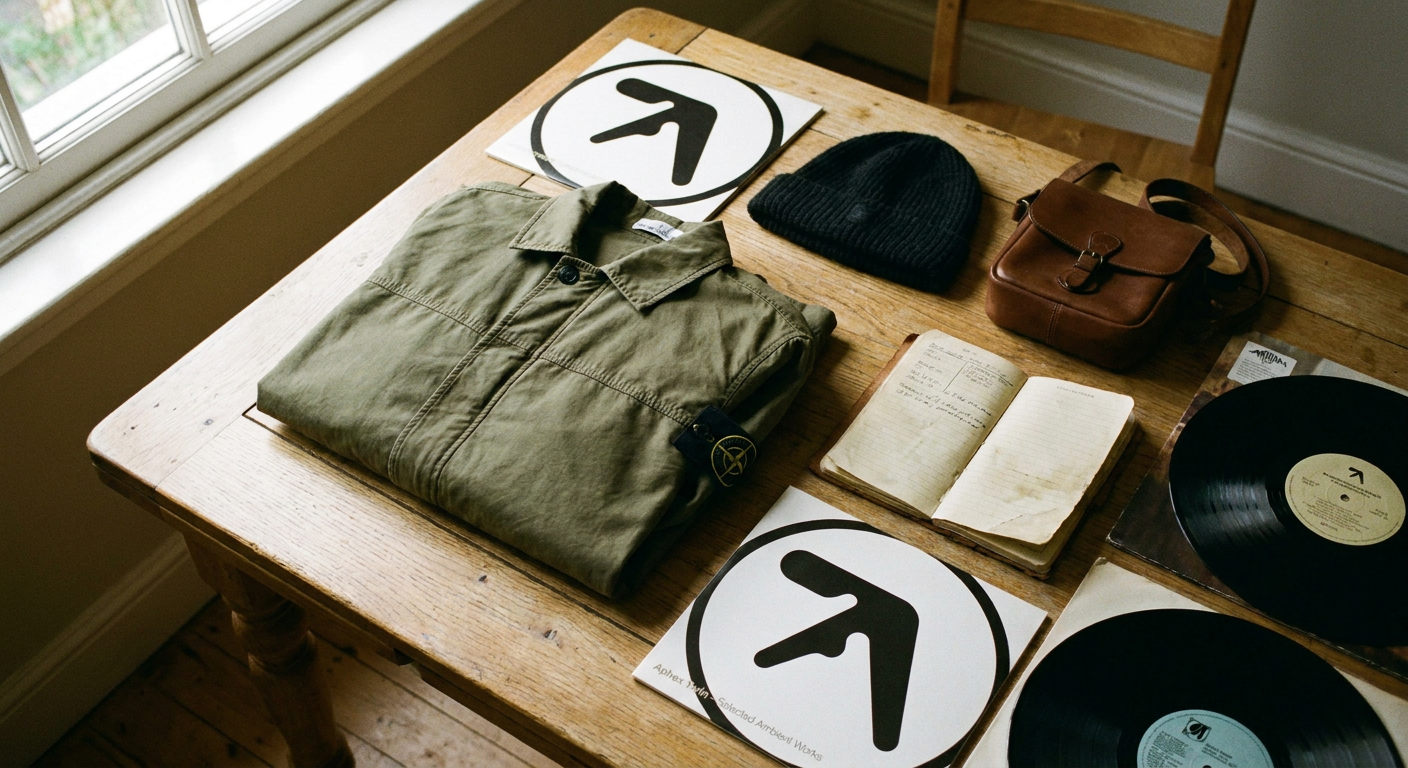
Stone Island began in 1982 almost by accident. Osti had acquired a batch of heavy, two-tone truck tarpaulin known as Tela Stella. It was too rigid for his primary label, C.P. Company, so he washed it repeatedly with pumice stones to break down the structure. The result was a run of seven jackets with an unapologetically functional, nautical aesthetic. To set them apart, he attached a removable cloth badge inspired by military insignia, bearing a compass rose.
Around the same time, English football clubs were dominating European competition. Supporters following Liverpool, Everton, Nottingham Forest, and Manchester United travelled across the continent in numbers. In cities like Turin, Milan, and Rotterdam, they encountered sportswear and high-end outerwear unavailable on British high streets.
They brought it home. At first, it was Sergio Tacchini track tops and Fila knitwear. By the late 1980s, the focus shifted to weather-resistant outerwear. When English fans discovered Osti-designed pieces in Italian boutiques, the appeal was immediate. The clothes were indestructible, expensive, and completely distinct from anything sold in domestic sports shops.
The Logic of the Terrace Uniform
Terrace casual culture was built on subverting expectations. In the 1970s, police targeted skinheads wearing heavy work boots, club scarves, and donkey jackets. The casual movement turned that dynamic upside down. If you dressed like a wealthy continental tennis player or an affluent European ski tourist, the police paid less attention.
Stone Island fit this subversion perfectly, but it also offered ruthless practicality. Standing on an exposed terrace in November requires proper windproofing. Osti's garments, treated with polyurethane resins and constructed from heavy-duty cottons, could withstand British winter weather without looking like generic hiking gear.
The price tag mattered just as much. Wearing Stone Island was a display of financial swagger. In towns hit hard by deindustrialisation, spending a week or two of wages on an Italian jacket was a deliberate statement. It signalled pride, sharpness, and the resources to buy the best. The removable badge became a marker of belonging, instantly readable to those in the know, totally invisible to outsiders.
Paninaro in Milan, Casuals in Manchester
While British fans were adopting Stone Island on concrete terraces, the brand had an entirely different life in Italy. There, it belonged to the Paninari. This was an apolitical youth movement that gathered around the Burghy fast-food restaurant in Milan's Piazza San Babila during the mid-1980s.
Shop from this article



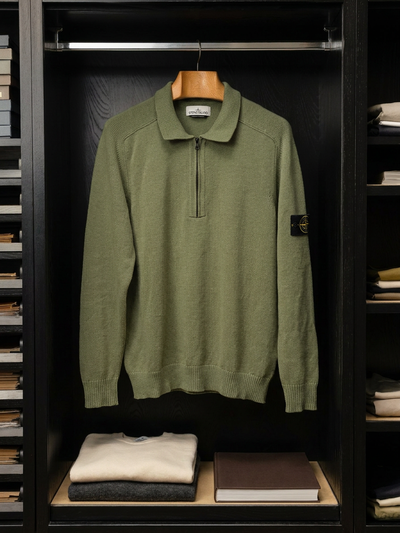

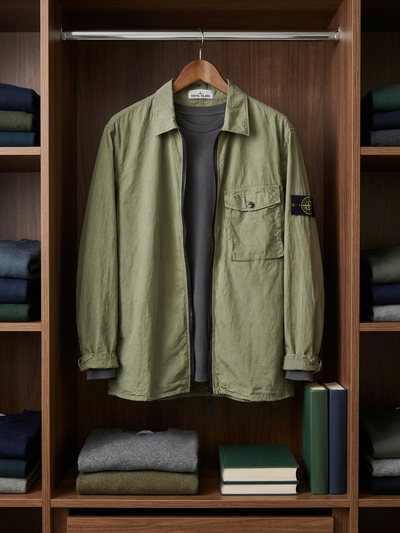
The Paninari were fascinated by American consumerism and Italian design. They wore Stone Island alongside Moncler down jackets, Best Company sweatshirts, and Timberland boots. For them, Osti's clothing was clean, bright, and modern. It had nothing to do with football, tribal turf wars, or matchday violence.
This cultural divergence remains stark. Across continental Europe, Stone Island is still viewed primarily as premium sportswear, admired for textile innovation and fabric treatments. In Britain, you cannot strip the brand of its terrace lineage. The association has been reinforced through generations, passing from father to son like a season ticket.
What This Means for the Pre-Owned Market
This distinct UK history completely reshapes how Stone Island trades on the secondary market. In the United States, pre-owned demand is largely driven by modern hype. American buyers look for recent collaborations with Supreme or pieces worn by Drake and Travis Scott. They want large logos and oversized fits.
In the UK, the collector community operates on archival reverence. Collectors do not care about recent celebrity endorsements. They look for specific production eras. The holy grail remains the Osti era (1982 to 1995), followed closely by the Paul Harvey design era (1995 to 2008).
Buyers scrutinise details that standard fashion platforms ignore. A green-edge badge, used prior to autumn/winter 2000, immediately commands a premium over the modern black-edge variant. Vintage art codes, printed on internal wash tags, are decoded to verify exact seasons. Marina stripes, Formula Steel smocks, and Ice jackets with functioning heat-reactive coatings trade hands for four-figure sums within specialist UK networks.
Even garment decay carries value. The inner coating of early Raso Gommato jackets famously degrades into a sticky or powdery mess over time. While an international buyer might view this as damage, seasoned British collectors view stripped Raso pieces as genuine battle-tested survivors.
The Refusal to be Sanitised
Moncler bought Stone Island in 2020 for over one billion euros. The brand now operates flagship stores in Mayfair, New York, and Tokyo. The marketing is slick, the runway influence is real, and the global corporate machine is fully engaged.
Yet on any matchday in England, the badge remains exactly what it was in 1989. You will see an original 1990s Tela Stella smock worn over an Adidas Spezial trainer on the train to an away fixture, completely indifferent to luxury fashion cycles. Stone Island belongs to Milan on paper, but its cultural spine will always sit on a damp railway platform waiting for the 11:04 to Sheffield.