brand focus
4 minute read
Stone Island Shadow Project — the complete guide to buying pre-owned
Words by Heather June Coombs
What is Shadow Project?
Stone Island Shadow Project isn't merely a sub-brand. It's an experimental division, a direct offshoot of the main Stone Island line, launched in 2008. While mainline Stone Island focuses on material innovation and robust utility, Shadow Project pushes boundaries in shape, fabric treatment, and complex construction. Think of it as Stone Island's research and development lab, where concepts later filter into the core collection. This distinction is crucial for understanding its unique appeal and value.
Co-founded by then-Creative Director Carlo Rivetti and Errolson Hugh of ACRONYM, Shadow Project brought a more technical, urban-militant aesthetic. Their early collections, often monochromatic, favoured intricate pocket systems, modular designs, and aggressive silhouettes. It wasn't for everyone. It still isn't. This exclusivity contributes to its enduring collectibility.
Shadow vs. Mainline: The Nuances
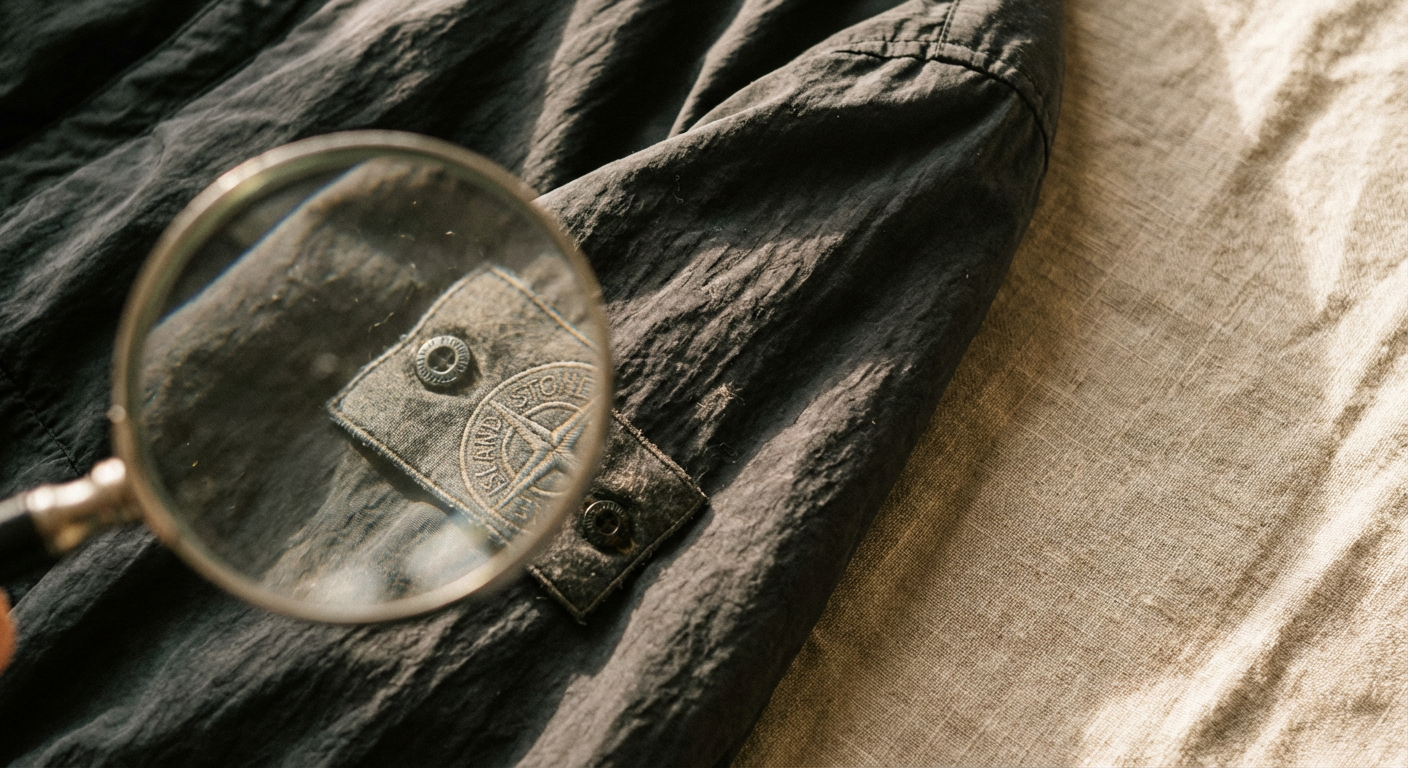
The immediate difference lies in the badge. Shadow Project pieces feature a black badge with white stitching, instead of the iconic green and yellow. This small detail signals an intentional divergence. Beyond the badge, the design language shifts. Mainline Stone Island embraces vibrant colours and sportswear-derived shapes. Shadow Project leans into muted tones – black, grey, olive – with more considered, often asymmetric, cuts and functional details designed for urban environments. Fabric development is shared, but Shadow Project frequently gets first access to the more radical processes or exclusive blends.
Construction also differs. Shadow Project pieces often incorporate advanced ergonomic patterning, laser-cutting, and complex seam taping. Pockets are not just pockets; they're integrated storage solutions, often with hidden zips or magnetic closures. Zippers are typically waterproof Aquaguard or similar, and hardware is more industrial, less overtly branded. These aren't minor distinctions; they drive the price point and the collector appeal.
Identifying Genuine Shadow Project
Authentication begins with the badge. It should be black with white stitching, not a faded green one, and not a standard black and yellow "ghost" badge. Check the material; early Shadow Project badges felt slightly different, a denser cotton. The main internal label will state "STONE ISLAND SHADOW PROJECT" and include the wash instructions and unique Certilogo code, often a more integrated, less obtrusive version than the mainline label.
Beyond labels, look at construction. Stone Island's attention to detail is legendary, and Shadow Project amplifies this. Stitching should be immaculate, even on intricate designs. Zippers will be high-quality YKK or similar, often waterproof. Pockets will be lined correctly. Fabric will feel substantial and unique. If it's a bonded fabric, check edges for fraying or delamination, a common issue with older technical wear.
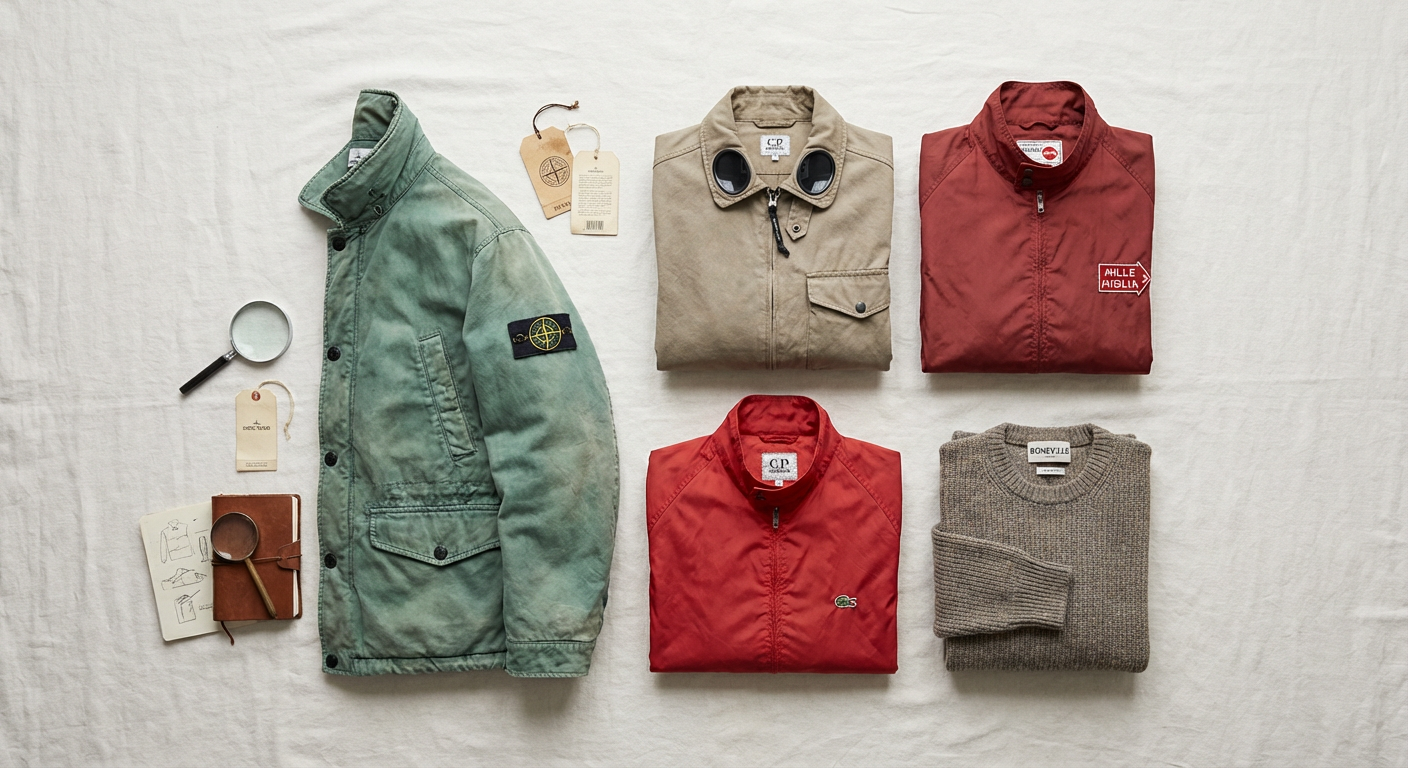
Every genuine Stone Island item from AW14 onwards carries a Certilogo QR code inside. Scan it. It should take you to their verification page for that specific item. If it's pre-AW14, you'll need photo evidence of labels, badges, and detailed close-ups against known examples. Be wary of sellers with poor, blurry photos.
If it’s a bonded fabric, check edges for fraying or delamination, a common issue with older technical wear.
Shop from this article
Sought-After Seasons and Key Pieces
Early collections, particularly from 2008-2012, are highly prized. These defined the Shadow Project aesthetic and often featured materials or design concepts that never saw widespread release in the mainline. Specific items like the Dual Grid Ventile Smock (SS10 or FW11), the articulated Scarabaggio Jackets from various seasons, or the Stealth Coat are perennial favourites. Anything involving DPM Chiné camo (a digital camouflage developed exclusively for Shadow Project) or Imprint-3B fabric also commands a premium. Look out for complex cargo trousers and innovative layering pieces from these eras. The market for these isn't about hype; it's about scarcity and demonstrable innovation.
Later collections continued the experimental spirit, but the pure ACRONYM influence arguably peaked in the initial years. That said, later fabric innovations like Lamy-TC or specific thermo-reactive pieces still perform well. The key is condition and originality. Unworn or lightly worn examples from these initial defining collections represent serious investment pieces.
Condition Grades and Pricing
Given the technical nature, condition is paramount. Expect to pay a premium for "like new" or "excellent" condition. Any visible wear, especially on articulated points, is a red flag. Look for abrasion on cuffs, hems, or pocket entries. Check for fading, particularly on darker pieces, which can indicate poor care. Delamination, where the outer fabric separates from internal membranes, is a common issue with older shell jackets and significantly impacts value, making a piece essentially unwearable for its intended purpose.
"Good" condition pre-owned Shadow Project should still be structurally sound with minimal cosmetic flaws for a fair price. "Fair" condition pieces might have minor repairs, faded badges, or some cosmetic wear, but should be priced accordingly. Anything below "fair" is usually only worth considering for parts or if the piece is exceptionally rare and repairable. Never overpay for damaged technical wear, as professional repairs are expensive and often compromise the original integrity.
Why the Premium Holds
Shadow Project holds its value because it's niche, technically advanced, and genuinely limited. Production runs are smaller than mainline Stone Island, making specific pieces harder to find. It appeals to a collector who understands the innovation and craftsmanship, not just brand recognition. The association with ACRONYM and Errolson Hugh also bolsters its status, creating a distinctive aesthetic that transcends seasonal trends.
It's not just about fashion; it's about wearable design and technical performance. The pieces are built to last, assuming proper care, and often feature details that are genuinely functional, not just decorative. This combination of scarcity, technical prowess, design integrity, and heritage ensures that Shadow Project remains a consistent performer in the pre-owned market, often fetching prices comparable to, or even exceeding, its original retail price for key items.
Buying pre-owned Shadow Project requires an understanding of its history, its construction, and its specific markers. Do your research on fabric types, season codes, and common issues. It's an investment, but a considered purchase will reward you with a piece of truly innovative outerwear that stands apart.