
brand focus
4 minute read
Stone Island vs C.P. Company — which holds resale value better?
Words by Heather June Coombs
The Stone Island badge, for better or worse, is the ultimate guarantor of value.
Stone Island vs C.P. Company: The Resale Battle
The question of Stone Island versus C.P. Company is less a debate and more a foundational text for a subset of menswear enthusiasts. Both brands, born from Massimo Osti’s vision in Italy, command significant attention in the pre-owned market. Yet, when it comes to holding value, one consistently pulls ahead.
The Osti Legacy and Market Overlap
Massimo Osti founded C.P. Company in 1971, then Stone Island in 1982. This shared parentage ensures a significant overlap in their fanbases. Collectors often appreciate the technical material development, innovative dyeing processes, and functional design that define both brands. The core consumer values utility, durability, and a distinct aesthetic that avoids overt branding, despite the instantly recognisable Stone Island badge and C.P. Company goggle. This close relationship means buyers often consider both, but their resale trajectories diverge.
Outerwear: Where Value is Forged
Outerwear is arguably the most scrutinised category for both Stone Island and C.P. Company. Here, the differences in resale value become most apparent. For Stone Island, the iconic pieces — the Raso Gommato field jacket, various types of Smocks (Ventile, Tela Stella, Nylon Metal), and early AW seasons with particular badges — consistently achieve strong resale prices. A well-preserved Opaque Nylon Smock from the early 2000s, for instance, can often fetch 60-70% of its original retail price, sometimes more for genuinely rare examples. C.P. Company's Goggle Jackets, particularly Smocks and Metropolis jackets, are also highly sought after. However, their ceiling is generally lower. A comparable C.P. Company piece might hit 40-50%. Original Osti-era C.P. Company (pre-1994) can defy this, but those pieces are increasingly hard to find in good condition. The sheer volume and consistency of Stone Island’s desirable outerwear mean it dominates this segment.
Knitwear & Mid-Layers: A Clearer Picture
When moving beyond outerwear, the gap widens further. Stone Island knitwear, especially those with unique textures, heavy gauges, or rare dyeing treatments, maintain a respectable portion of their original value. A chunky wool roll neck or a particularly interesting garment-dyed crewneck will usually find a buyer for 30-50% of retail, depending on condition and specific season. Badge placement always helps. C.P. Company knitwear, while often excellent quality, struggles to match this. Without the direct visual cue of the Stone Island badge, and with less overt material innovation in some of its knitwear offerings, the resale prices tend to drop to 20-40%. The Goggle Hooded knits are an exception, performing closer to Stone Island, but these are a niche within C.P. Company’s wider knitwear range.
Shop from this article
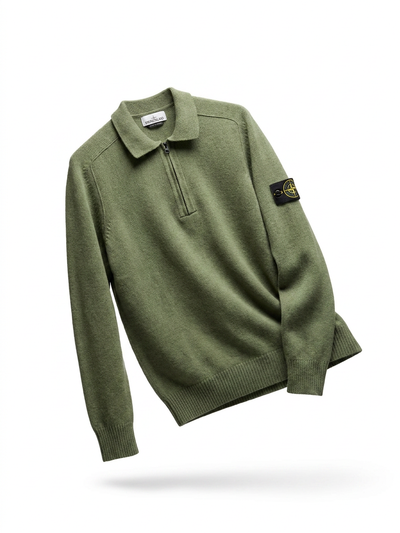
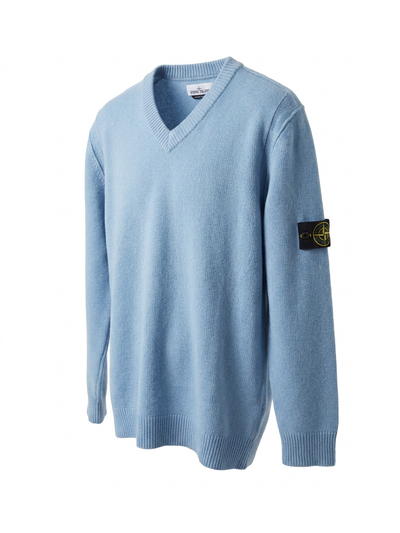
Accessories: Badges, Goggles, and Branding
Patches, hats, and bags often highlight the core difference in brand identity perception. Stone Island accessories, especially the iconic badge itself, command strong resale. Early badges can sell for significant sums to collectors looking to refresh or customise pieces. Headwear is consistent: a good condition beanie or cap with the compass logo will hold 40-60% of its value. C.P. Company’s accessories, often featuring the Goggle lenses or a more subtle logo, do not perform at the same level. Hats and scarves are often 20-30% of retail. The goggle lens integrated into headwear, eyewear or bags is an advantage, but less universally appealing than the Stone Island badge. The latter is, for better or worse, recognised far beyond its original subcultures, which naturally inflates demand.
The Data: Supply, Demand, and the Badge Effect
The cold reality of resale is driven by supply and demand. Stone Island consistently generates higher demand on the pre-owned market. There is simply a larger, more active collector base willing to pay a premium. Part of this comes down to global recognition. Stone Island's appeal has transcended its original football casual roots to become a global luxury streetwear staple. C.P. Company, while also highly respected, retains a more niche, almost connoisseur appeal by comparison. The "badge effect" is undeniable. The Stone Island compass acts as an immediate identifier and a status symbol. While many collectors might deride "badge tourism," its pervasive influence on value cannot be ignored. C.P. Company’s branding is more subtle, often relying on the goggle or a less prominent logo. This makes it less immediately recognisable to a mass market, tempering its resale potential.
Verdict for 2026 Buyers
For a buyer looking at pre-owned pieces in 2026, the guidance is clear: Stone Island generally represents a stronger investment for resale value. If your ultimate goal is to buy a piece you can wear and then sell on for a good portion of your money back, Stone Island is the safer bet across almost all categories. The brand's consistent innovation, coupled with its global recognition and the enduring power of its badge, ensures sustained demand. C.P. Company remains a formidable choice for those who value the technical innovation and considered design without the associated badge premium. Its pieces are often more understated, making them appealing to a different kind of collector. However, if pure resale value is the metric, Stone Island maintains its lead. What does it say about us that a small piece of removable fabric dictates so much?