patagonia
3 minute read
The Patagonia Fleece: Why the Archive Versions Outperform Modern Production
Words by Heather June Coombs
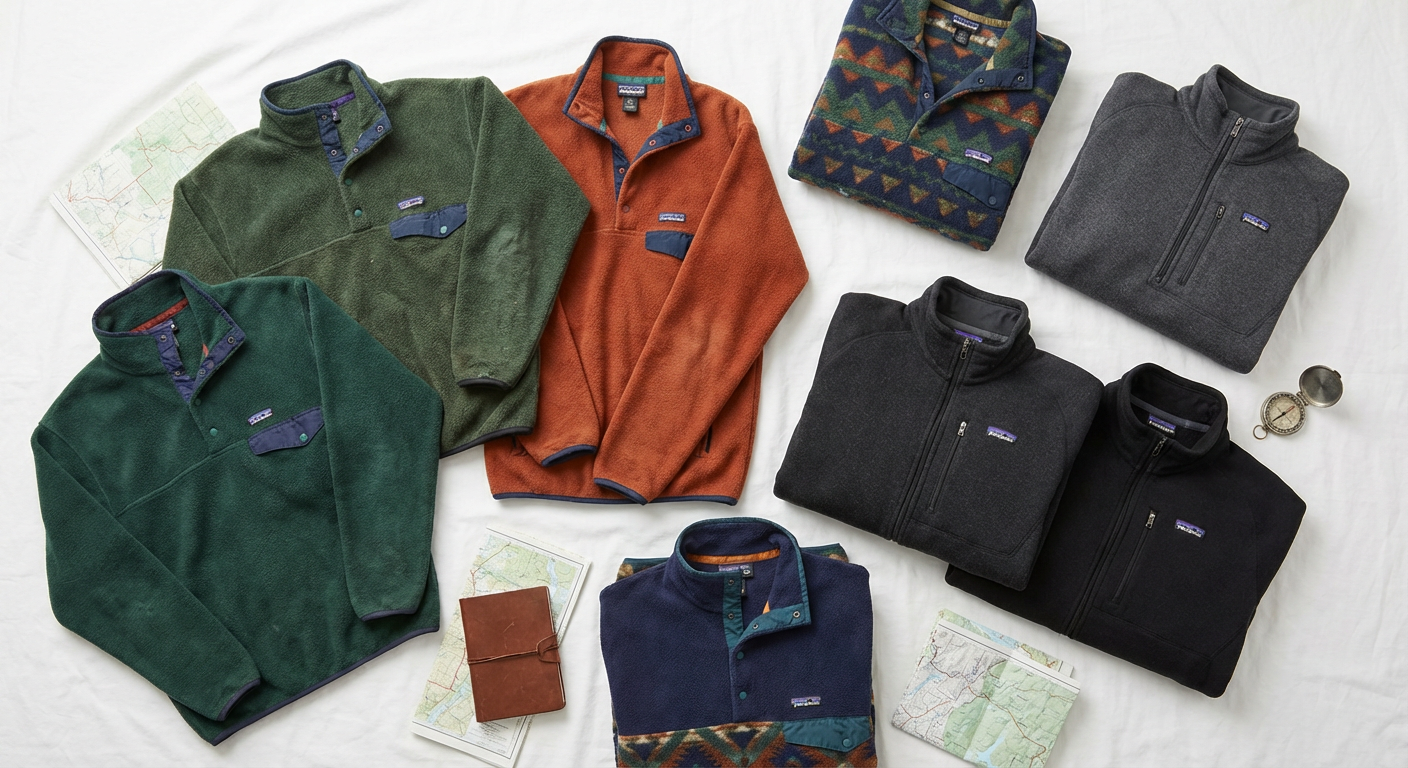
The hand-feel of an early 90s Synchilla is unmistakable: dense, almost felt-like, with a satisfying heft.
The Unassuming Icon: Patagonia Fleece
The Patagonia fleece, specifically the Synchilla Snap-T and its variants, is a ubiquitous item. It’s been a staple of climbers, students, and dads for decades. Yet, look closely at the secondary market, and you’ll see a clear preference for older pieces. This isn't just about nostalgia. The archive versions genuinely outperform modern production in several key areas.
Fabric: A Matter of Weight and Feel
Early Patagonia fleece was made from Polartec, a fabric developed in collaboration with Malden Mills (now Polartec LLC). The original Synchilla fabric was dense, almost felt-like, with a satisfying heft. It felt substantial. Modern production, while still excellent in performance, often uses a lighter, softer fleece. It's more pliable, less structured. This shift is partly down to consumer preference for lighter garments, and partly manufacturing efficiencies. But the earlier, heavier pile retains its loft and warmth better over time. It pills less. The hand-feel is different. You can spot the difference blindfolded.
Colours: Depth vs. Brightness
Patagonia’s colour palette has always been distinctive. But the dyes used on older fleeces had a different quality. They felt deeper, more organic. Think muted earth tones, rich forest greens, and solid navys that felt classic, not just contemporary. The pop of a teal from the late 80s or the deep purple of a 90s Synchilla is unique. Modern colours, while vibrant, often feel less nuanced. They're brighter, more saturated. It’s a subtle distinction, but it matters to those who collect. The older colours have a patina that newer ones simply haven't earned yet. They integrate better into a wardrobe built on natural tones and heritage fabrics.
Shop from this article
Construction: Built to Last, Not Just Sell
Patagonia has always had a reputation for durability. That hasn't changed. But scrutinise the details on a fleece from the 1990s compared to one from last season. The stitching on the older pieces often feels more robust, the bound cuffs and hems less prone to stretching. The snap placket, a hallmark of the Snap-T, feels more substantial. There’s less compromise in the older construction. They were built for demanding use in the mountains, and that DNA is tangible even in a casual fleece. Modern versions are still tough, but there’s a slight softening around the edges, a subtle streamlining that can sometimes feel like a concession.
The "Made in USA" Factor
Many of the most sought-after archive Patagonia fleeces bear the "Made in USA" tag. While Patagonia has always maintained high ethical and environmental standards in its global factories, there’s an inherent value placed on domestic production for many collectors. It speaks to a different era of manufacturing, closer to the brand's origins. This isn't about quality alone; quality today is globally consistent. It’s about provenance, about the story attached to the garment. A US-made Patagonia fleece feels like a direct link to the brand's foundational mythos, to the climbers in Ventura, California. It connects to a time before global supply chains became the norm.
The Resale Market Reflects It
The pricing on platforms like Patina makes the case clearer than any argument. A well-preserved, early 90s Synchilla Snap-T in a desirable colour often commands higher prices than a brand-new equivalent. This isn't just scarcity. It's a genuine preference for the older garment's material quality, its construction, and its aesthetic. People are willing to pay more for fewer compromises. The archive Patagonia fleece is not simply 'used'; it represents a specific iteration of industrial design that has proven its worth over decades. It's an investment in enduring quality and a subtle statement in a world of constant newness. The Patagonia fleece still serves its purpose admirably in its current form. But for those who care about the nuances of fabric, the depth of colour, and the tangible sense of uncompromising build quality, the older versions remain the benchmark. They simply feel more like Patagonia.
Related articles