brand focus
3 minute read
The Quiet Status of Owning Things Properly Rather Than Owning Things New
Words by Heather June Coombs
The real story begins after the box is discarded. How does it wear? How does it age? Does it develop character, or does it simply degrade?
The Quiet Status of Owning Things Properly Rather Than Owning Things New
There is a subtle shift happening. Once, the apex of consumer aspiration was the pristine, untouched item, delivered in its original packaging. Now, a different kind of value is emerging. It is not about scarcity, or price, but provenance. It is about a quiet status, understood by those who know the difference.
This isn't about being seen to be ‘sustainable’ in the performative sense. It is about a deeper appreciation for an object's life cycle. It is about understanding that a truly good thing often improves with age, or at least holds its character in a way new items rarely can. The pursuit of "new" often means chasing a transient trend. The pursuit of "properly owned" means investing in something designed to last.
Beyond The Unboxing Video
The cult of the unboxing video, with its emphasis on the factory-fresh, factory-sealed experience, misses the point. The real story begins after the box is discarded. How does it wear? How does it age? Does it develop character, or does it simply degrade? A brand new pair of Red Wing Iron Rangers are stiff, unyielding. A pair with five years of wear tells a story. They fit like a second skin. That's true value.
We are not suggesting a blanket rejection of new things. Quality brands still make quality items. But the understanding that some of the best pieces are already out there, broken in, with a history, is growing. This is not the thrift store lottery. This is targeted acquisition. Knowing what you want, knowing its value, and understanding how it performs years down the line.
The Authenticity of Use
Authenticity is not just about whether an item is genuine. It is also about its story. A Stone Island Marina smock from the early 90s, with the faded star motif and the robust cotton still holding its own, carries an inherent authenticity. It has seen weather. It has been lived in. Its value is embedded in that history, not despite it.
This contrasts sharply with the disposable fashion cycle. Buying new, only for an item to fall apart after a few washes, feels like a waste. Opting for something pre-owned, where its durability has already been proven, is a pragmatic choice. It is a quiet nod to quality, not a loud proclamation of novelty.
Shop from this article
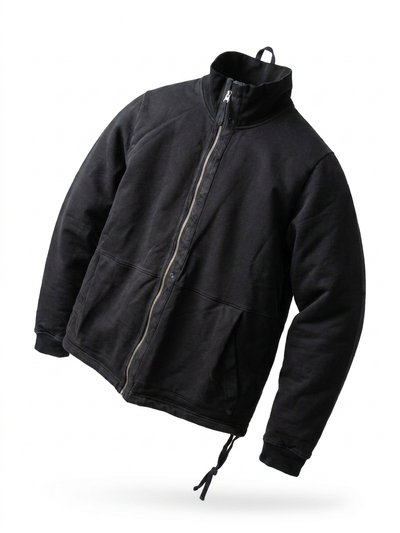
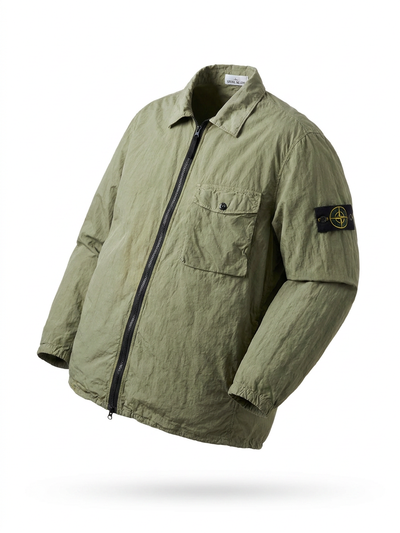
Understanding Real Value
Consider a first-pressing vinyl. A pristine, unplayed copy might fetch a premium, but often a well-loved copy, with some minor sleeve wear and light surface noise, is the true collector's piece. It has been listened to, appreciated, lived with. Its condition reflects its purpose. This is not about accepting damage, but understanding the difference between wear and neglect.
The same logic applies to clothing. A vintage Barbour Beaufort, resalvaged and reproofed, holds a deeper value than a brand new equivalent straight from the factory. The patina, the slight variations in colour, the subtle softening of the wax cotton – these are not flaws. They are features. They are proof of a life lived, and a quality that endures.
The Investment in Knowledge
To acquire things properly, you need knowledge. You need to know the difference between eras, between original and reissue, between factory flaw and genuine wear. This isn't passive consumption. It is an active engagement with the objects you bring into your life. It means understanding the Ventile fabric, the intricacies of a specific Japanese denim loom, or the sonic differences between a UK and US pressing.
This knowledge brings its own reward. It is the satisfaction of finding a particular C.P. Company goggle jacket from the Paul Harvey era, knowing its provenance, its design lineage, and its enduring quality. It is about having a considered collection, rather than just a pile of things. This quiet status is earned through discernment, not through impulse buys.
The market for pre-owned isn't just about saving money, or being "green." It is about recognising that some things are simply better, more interesting, and more substantial when they have a history. It is a rejection of the relentless pursuit of the fleeting, in favour of the enduring. It is about owning well, not just owning new.