levi's
4 minute read
Pre-Owned Denim: How to Date a Pair of Levi's 501s
Words by Heather June Coombs
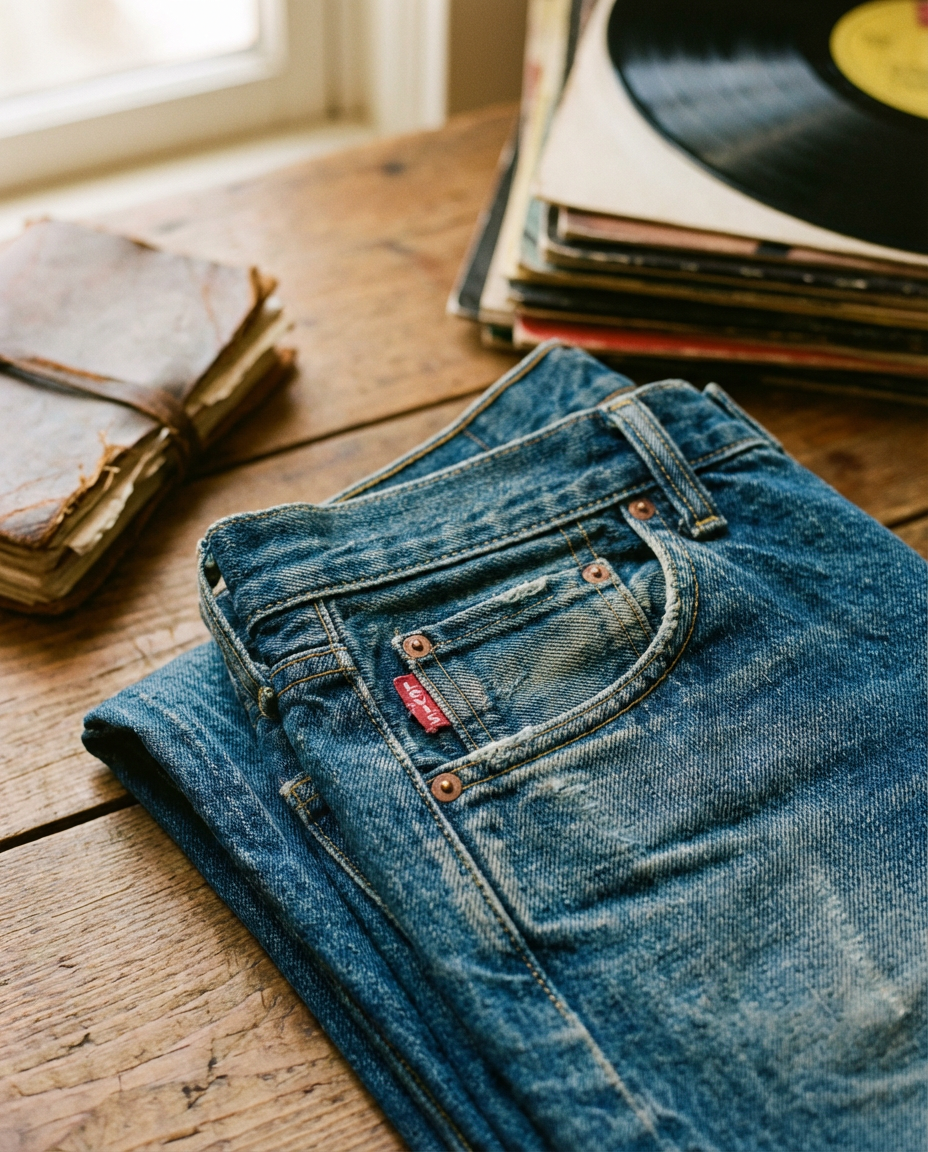
The Big E/Small e red tab is the first, and often simplest, indicator of a 501's age.
The 501: More Than a Jean
Levi's 501s are the definitive jean. They have been in continuous production for over 150 years, worn by everyone from gold miners to movie stars. Their ubiquity means they are also one of the most common pre-owned items, and a prime candidate for collectability. Knowing how to date a pair of 501s isn't just for collectors; it helps you understand what you're buying, if it's the real deal, and why one pair might feel and wear differently to another.
The Big E and Small e Red Tab
The most instantly recognisable dating cue for Levi's jeans is the capitalisation of the 'E' on the iconic red tab. Prior to 1971, the word LEVI'S on the tab was always written with a capital 'E' – the 'Big E'. After 1971, it became 'Levi's' with a lowercase 'e' – the 'Small e'. This simple detail provides a clear dividing line: anything with a Big E tab is pre-1971 vintage. Big E jeans command higher prices and are generally sought after for their superior denim quality and construction, which often includes features like selvedge outseams. Small e jeans are still excellent, but the shift in capitalisation coincided with changes in manufacturing processes and materials.
Selvedge Denim and Inner Seams
Before the mid-1980s, most Levi's 501s were made with selvedge denim, identifiable by the clean, reinforced edge on the outseam, often visible when you cuff the jean. This edge prevents fraying and typically features a coloured line – a red line for standard Levi's. Selvedge denim was produced on narrower looms, a slower and more expensive process. When you turn a pair of 501s inside out, look at the outseam (the seam running down the outside of the leg). If it's a neat, self-finished edge with a white weft thread and often a red indicator line, it's selvedge. If it's just a regular serged or overlocked seam, it's non-selvedge. The widespread adoption of wider, faster projectile looms led to the phase-out of selvedge for standard production by the mid-80s. Post-80s selvedge 501s are typically specific 'premium' or 'vintage reproduction' lines.
Care Tags and Stitching
Care tags were introduced in the early to mid-1970s. Earlier jeans would only have a paper size tag sewn into the waistband. If a pair of 501s has a care tag with washing instructions, it’s unlikely to be from the 1960s or earlier. The style and information on these tags also evolved, offering further clues. Early care tags were basic, often black and white. Stitching details can also be precise. Prior to the late 1960s, Levi's used lemon-yellow and orange thread for contrast stitching. After this, different shades of orange became more common, and by the 1970s, more uniform colours were used. The precise combination of thread colours in different areas of the jean can hint at a specific era, something dedicated collectors obsess over.
Back Patch and Button Details
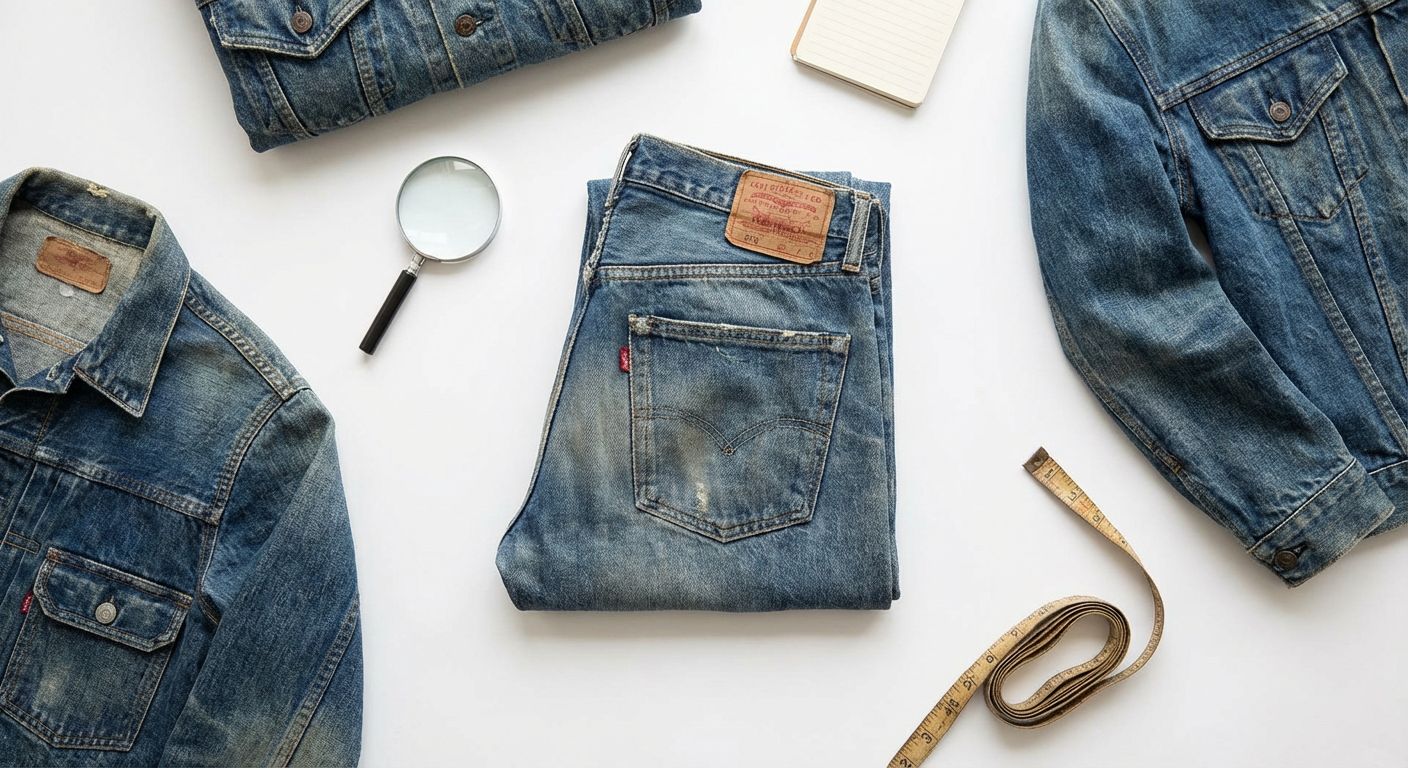
The famous "Two Horse" patch on the back of the waistband has undergone revisions over the decades. Early patches were often made of leather and could shrink or harden with age. By the 1950s, a more durable, card-like material was introduced, though leather patches did reappear on premium lines. Looking at the exact wording and font on the patch can help narrow down dates. The buttons on the fly – particularly the top button – also carry identifying marks. The factory code (a stamp on the back of the top button) can sometimes provide a date. For instance, a two-digit number might correspond to a specific factory. Early buttons were often plain or featured minimal stamping. Later, more detailed numbers and letters appeared. The 501 button fly has always been a key feature, so examining the buttons for inconsistencies or specific markings is a reliable method.
Beyond the Obvious: Fabric Feel and Fade
Ultimately, the best way to develop an eye for a specific era of 501s is to handle as many pairs as possible. The weight, texture, and fading characteristics of the denim have changed significantly. Early denim was often heavier, darker, and developed more pronounced, vertical 'roping' fades at the seams. Modern, mass-produced denim can feel thinner and softer, fading in a less distinct pattern. Whether you're after a piece of history, superior construction, or just a great pair of jeans, knowing these details transforms a casual purchase into an informed acquisition.